For decades, the 401(k) has been the undisputed cornerstone of the American retirement savings landscape. If you’re employed, you likely have one, and you’ve been told to contribute enough to get the employer match—arguably the best piece of financial advice for the masses. But if your financial strategy begins and ends with your 401(k), you’re leaving powerful tools on the table.
A truly robust, tax-efficient, and resilient retirement plan is built on a foundation that extends beyond the workplace plan. It incorporates individual vehicles that offer unparalleled flexibility and control. This deep dive explores three critical components of a sophisticated retirement strategy: Individual Retirement Accounts (IRAs), the strategic maneuver of Roth conversions, and the often-misunderstood “secret weapon”—the Health Savings Account (HSA).
Understanding how these accounts work, both in isolation and in concert, can be the difference between a retirement where you simply get by and one where you truly thrive.
Part 1: The Individual Retirement Account (IRA) – Taking Control of Your Retirement
The 401(k) is a function of your employment. An IRA, however, is yours and yours alone. It’s an account you open independently with a brokerage, bank, or credit union, giving you ultimate control over your investment choices and custodian.
Traditional IRA: The Tax-Deferred Workhorse
The Traditional IRA is the original individual retirement account, designed to mirror the tax structure of a Traditional 401(k).
- How It Works: You contribute pre-tax dollars (if you meet income requirements). This means every dollar you contribute reduces your taxable income for that year. The money then grows tax-deferred. You pay ordinary income tax only when you withdraw the funds in retirement.
- 2024 Contribution Limits: $7,000 ($8,000 if you’re age 50 or older).
- Key Considerations:
- Income Limits for Deductibility: Your ability to deduct Traditional IRA contributions phases out if you (or your spouse) are covered by a retirement plan at work and your income exceeds certain levels. For 2024, for single filers covered by a workplace plan, the phase-out range is $77,000 to $87,000. For married couples filing jointly, it’s $123,000 to $143,000.
- Required Minimum Distributions (RMDs): You must start taking money out of a Traditional IRA at age 73 (as of the SECURE 2.0 Act). These forced distributions can increase your tax burden in later life and may not align with your actual spending needs.
- Early Withdrawal Penalty: Withdrawals before age 59½ are generally subject to a 10% penalty on top of ordinary income taxes, with certain exceptions like first-time home purchases or higher education expenses.
Best For: Individuals who expect to be in a lower tax bracket in retirement than they are today and who are not covered by a high-income workplace plan (making their contributions deductible).
Roth IRA: The Tax-Free Powerhouse
The Roth IRA, introduced in 1997, flipped the traditional tax script and has become a favorite of savvy investors and young professionals.
- How It Works: You contribute with after-tax dollars. There is no upfront tax deduction. However, the money grows completely tax-free, and qualified withdrawals in retirement—both contributions and earnings—are 100% tax-free.
- 2024 Contribution Limits: $7,000 ($8,000 if you’re age 50 or older).
- Key Considerations:
- Income Limits for Eligibility: The ability to contribute directly to a Roth IRA is subject to income limits. For 2024, the phase-out range is $146,000 to $161,000 for single filers and $230,000 to $240,000 for married couples filing jointly.
- No RMDs: This is a massive advantage. Roth IRAs are not subject to Required Minimum Distributions during the owner’s lifetime. This allows the account to continue growing tax-free indefinitely, making it a powerful wealth transfer tool to heirs.
- Flexibility on Contributions: You can withdraw your contributions (but not earnings) at any time, for any reason, without tax or penalty. This provides a layer of emergency-fund flexibility not found in other retirement accounts.
Best For: Younger investors in lower tax brackets, anyone who believes their tax rate will be higher in the future, and those seeking tax-free income and flexibility in retirement.
The Backdoor Roth IRA: For high-income earners who exceed the Roth IRA income limits, a “Backdoor Roth IRA” is a legal and popular strategy. It involves making a non-deductible contribution to a Traditional IRA and then immediately converting it to a Roth IRA. While the mechanics are straightforward, it requires careful tax reporting (Form 8606) and works best if you don’t have other pre-tax IRA funds, due to the “Pro-Rata Rule.”
Part 2: The Roth Conversion – A Strategic Tax Gamble
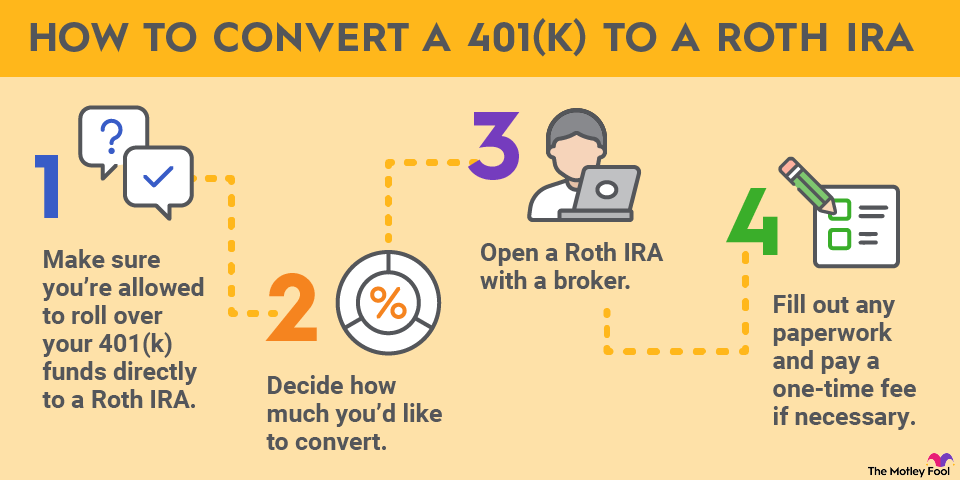
A Roth conversion is the process of moving funds from a pre-tax retirement account (like a Traditional IRA, SEP IRA, or 401(k)) into a Roth IRA. This is a taxable event: you pay ordinary income tax on the amount converted in the year of the conversion.
Why would anyone willingly choose to pay taxes today?
The Core Rationale: Pay Taxes Now to Save Later
The fundamental bet of a Roth conversion is that the long-term benefit of tax-free growth outweighs the immediate pain of the tax bill. You are essentially locking in your current tax rate on the converted amount, betting that future tax rates will be higher.
Ideal Scenarios for a Roth Conversion:
- A Low-Income Year: The period between retirement (when you stop earning a salary) and age 73 (when RMDs begin) is often a window of opportunity. Your taxable income may be at a lifetime low, placing you in a lower tax bracket. Converting a portion of your Traditional IRA each year during this window to “fill up” your current low tax bracket can be highly efficient.
- Market Downturns: When the value of your portfolio is depressed, you can convert more shares of an investment for the same tax cost. When the market recovers, all that growth happens in the tax-free environment of the Roth IRA.
- Estate Planning: Since Roth IRAs have no RMDs, they can be a superior vehicle for leaving a legacy. Your heirs will receive the account income-tax-free, though they will be subject to RMDs under the 10-year rule.
- Managing Future RMDs: If you have a large Traditional IRA balance, future RMDs could push you into a higher tax bracket, increase Medicare Part B and D premiums due to Income-Related Monthly Adjustment Amounts (IRMAA), and cause more of your Social Security benefits to be taxed. Strategic, partial Roth conversions over time can shrink your Traditional IRA balance and mitigate these future tax “torpedoes.”
The Critical Caveats:
- The Tax Bill is Real: The converted amount is added to your taxable income. You must have the cash outside of the retirement accounts to pay the tax. Using funds from the IRA itself to pay the tax is a costly mistake, especially if you’re under 59½, as it could trigger an early withdrawal penalty.
- The Pro-Rata Rule: If you have any pre-tax dollars in any Traditional, SEP, or SIMPLE IRA, the pro-rata rule complicates Backdoor Roth contributions and can make partial conversions less clean from a tax perspective.
- No Reversals (Recharacterizations): The Tax Cuts and Jobs Act of 2017 eliminated the ability to “undo” or recharacterize a Roth conversion. The decision is final.
Roth conversions are not a one-size-fits-all strategy. They require careful modeling and projection of future income and tax liabilities.
Part 3: The Health Savings Account (HSA) – The Ultimate Retirement Account
The Health Savings Account is the most misunderstood and underutilized account in the personal finance toolkit. Most people view it as a simple spending account for medical bills. In reality, when used strategically, it is the most tax-advantaged account available to Americans.
The Triple Tax Advantage
No other account offers this trifecta:
- Tax-Deductible Contributions: Contributions made through your employer are pre-tax (FICA tax-free too, if done via payroll). Individual contributions are tax-deductible.
- Tax-Free Growth: Investments within the HSA grow tax-free.
- Tax-Free Withdrawals: Withdrawals used for qualified medical expenses are completely tax-free.
This is superior to both a Traditional account (tax-deductible going in, taxable coming out) and a Roth account (after-tax going in, tax-free coming out). The HSA is both: tax-deductible going in and tax-free coming out for medical expenses.
Eligibility: The High-Deductible Health Plan (HDHP) Gatekeeper
To contribute to an HSA, you must be enrolled in a qualified High-Deductible Health Plan (HDHP). For 2024, the IRS defines an HDHP as having a minimum deductible of $1,600 for self-only coverage or $3,200 for family coverage, and maximum out-of-pocket limits of $8,050 (self-only) or $16,100 (family).
2024 HSA Contribution Limits: $4,150 for self-only coverage and $8,300 for family coverage. An additional $1,000 catch-up contribution is allowed for those 55 and older.
The Super-Charged HSA Strategy: Don’t Spend It
The conventional use of an HSA is to contribute and then immediately spend the funds on current-year medical costs. While this is still tax-advantaged, it misses the bigger opportunity.
The powerful, long-term strategy is to:
- Maximize your HSA contributions every year.
- Invest the funds for long-term growth, just like you would in a 401(k) or IRA. Many HSA providers allow you to invest once your cash balance reaches a certain threshold.
- Pay for current medical expenses out-of-pocket. Keep your receipts for every qualified medical expense you incur but pay for with after-tax dollars.
- Let your HSA grow, untouched, for decades.
Why is this so powerful? You are creating a stealth retirement account. Those saved receipts act as a “checkbook” you can cash in at any time in the future, tax-free. You can reimburse yourself from the HSA for that 20-year-old medical bill tomorrow, next year, or in retirement, allowing the funds to compound tax-free in the meantime.
In Retirement, the HSA Becomes a Financial Powerhouse:
- After age 65, you can withdraw funds for any reason without the 20% penalty. If used for non-medical expenses, you’ll simply pay ordinary income tax, making it function like a Traditional IRA.
- If used for qualified medical expenses (including Medicare premiums, long-term care premiums, and out-of-pocket costs), the withdrawals remain completely tax-free.
Given that the average retired couple age 65 in 2023 may need $315,000 saved (after tax) to cover health care expenses in retirement (according to Fidelity Investments), the HSA is the perfect, purpose-built vehicle to address this massive liability.
Read more: The Ultimate Guide to US Dividend Stocks: Building a Passive Income Stream
Weaving the Tapestry: An Integrated Strategy
The real magic happens when you stop viewing these accounts in isolation and start integrating them into a cohesive, lifelong plan. Here’s how they can work together across different life stages.
Early Career (Ages 20-35)
- Priority 1: Get the 401(k) match.
- Priority 2: Fund a Roth IRA. Your income is likely lower, making your current tax rate a bargain. Decades of tax-free growth are invaluable.
- Priority 3: If an HDHP makes sense for your health, open and begin funding an HSA. Even small contributions invested early can grow into a substantial sum.
Mid-Career (Ages 35-55) – The Peak Earning & Saving Years
- Maximize all available accounts: 401(k), HSA, and IRA (via Backdoor Roth if income is too high).
- Asset Location: Hold bonds in your Traditional 401(k)/IRA (where growth will be taxed as income) and equities in your Roth and HSA (where growth is tax-free).
- Begin considering Roth conversions if you have a year with lower-than-usual income.
Pre-Retirement (Ages 55-65) – The Critical Window
- This is the prime time for strategic Roth conversions. You may have retired early or your income may have dropped, creating a low-tax opportunity to shift funds from Traditional to Roth before RMDs begin.
- “Roth Conversion Ladder”: A sophisticated strategy for early retirees involving a series of annual conversions that, after a five-year waiting period for each, provide access to penalty-free funds.
Retirement (Age 65+)
- Sequence Your Withdrawals:
- Taxable Accounts: Draw from brokerage accounts first to allow tax-advantaged accounts more time to grow.
- Traditional 401(k)/IRA: Take RMDs and other necessary distributions.
- HSA: Use for qualified medical expenses, tax-free.
- Roth IRA: Use this last. Since it has no RMDs and distributions are tax-free, it’s your perfect “longevity insurance” and estate planning vehicle.
Conclusion: Building Your Personal Fortress
The 401(k) is an essential barracks, but it shouldn’t be your entire financial fortress. By strategically deploying IRAs, Roth conversions, and HSAs, you build a resilient, multi-layered defense against market volatility, changing tax laws, and the unknown costs of healthcare and longevity.
This journey requires proactivity, education, and often, the guidance of a qualified financial planner who can help you navigate the complexities. The goal is not just to save for retirement, but to craft a future where you have control, flexibility, and the confidence that your money will work as hard for you in retirement as you worked for it throughout your life. Start looking beyond the 401(k) today.
Read more: Tax-Efficient Investing 101: A US Investor’s Guide to IRAs, 401(k)s, and More
Frequently Asked Questions (FAQ)
Q1: I max out my 401(k). Should I contribute to a Traditional IRA or a Roth IRA next?
This depends on your income and tax expectations. If you are a high earner covered by a workplace plan, your Traditional IRA contributions may not be deductible, making the Roth IRA (or the Backdoor Roth) the clear winner for tax-free growth. If you are in a high tax bracket now and expect to be in a significantly lower one in retirement, a non-deductible Traditional IRA isn’t ideal, but a deductible one could be. For most people in this situation, the Roth option’s future tax-free growth and flexibility are more advantageous.
Q2: I’ve heard Roth conversions are a good idea, but the tax bill scares me. How do I know if it’s right for me?
Your fear is justified—a large, poorly timed conversion can be costly. It’s generally not a good idea if it pushes you into a much higher tax bracket. The strategy is most effective when you have a year with temporarily low taxable income (e.g., a sabbatical, early retirement, or a business loss) and you have sufficient cash outside your retirement accounts to pay the conversion tax. Consulting with a fee-only financial planner to run tax projections is highly recommended before executing a conversion.
Q3: What happens if I need to access my retirement funds early?
- Roth IRA: You can always withdraw your contributions (but not earnings) at any time, tax- and penalty-free. This is a major safety net.
- Traditional IRA/401(k): Early withdrawals (before 59½) are generally subject to a 10% penalty plus ordinary income tax. There are exceptions, such as for a first-time home purchase (up to $10,000 from an IRA), higher education expenses, or certain medical costs.
- HSA: Withdrawals for non-qualified expenses before age 65 are subject to income tax plus a 20% penalty. After 65, only income tax applies.
Q4: I have an old 401(k) from a previous employer. What should I do with it?
You typically have four options:
- Leave it with your former employer’s plan (if allowed).
- Roll it over to your new employer’s plan (if allowed).
- Roll it over to an IRA. This is often the best option as it gives you maximum investment control and flexibility, especially if you are considering future Roth conversions.
- Cash it out. This is the worst option financially, as it will be subject to mandatory 20% withholding, income tax, and a 10% early withdrawal penalty if you’re under 59½.
Q5: Is an HSA really better than a Traditional PPO plan?
It depends on your health and risk tolerance. An HDHP/HSA combo is fantastic for healthy individuals with minimal expected medical costs, as it offers lower premiums and the powerful savings vehicle of the HSA. It can also be beneficial for those who can afford to cover the high deductible if a major medical event occurs. A PPO may be better for those with chronic conditions, expecting a major procedure (like surgery or childbirth), or who prefer the predictability of co-pays and a lower deductible, even with higher premiums. It’s a personal risk-management decision.
Q6: What are “qualified medical expenses” for an HSA?
The list is extensive and includes most costs associated with diagnosing, curing, mitigating, treating, or preventing disease. This includes deductibles, co-pays, dental and vision care, prescriptions, acupuncture, and even some over-the-counter items. You can find the full list in IRS Publication 502. Notably, health insurance premiums are generally not qualified, except for specific cases like COBRA, long-term care insurance, and Medicare premiums.