Summary
Building a diversified portfolio in the U.S. market helps investors reduce risk while capturing growth across asset classes. By balancing stocks, bonds, ETFs, and alternative investments, you can protect capital against volatility and inflation. This comprehensive guide covers practical strategies, sector insights, real-life examples, and tax-efficient approaches to help Americans create a robust, resilient, and future-ready investment portfolio.
Introduction: Why Diversification Matters in U.S. Investing
Every investor, from beginners to seasoned professionals, faces the same challenge: how to balance risk and reward. The U.S. market offers countless opportunities, but with opportunities come risks—market swings, sector volatility, inflation, and changing interest rates. Diversification is the principle that can protect your portfolio while still allowing it to grow.
Real-Life Example:
During the 2008 financial crisis, a 100% stock portfolio lost over 35% in value, whereas a diversified portfolio including bonds and alternative assets limited losses to around 15%. This shows the power of spreading risk across different assets and sectors.
1. Understanding Diversification
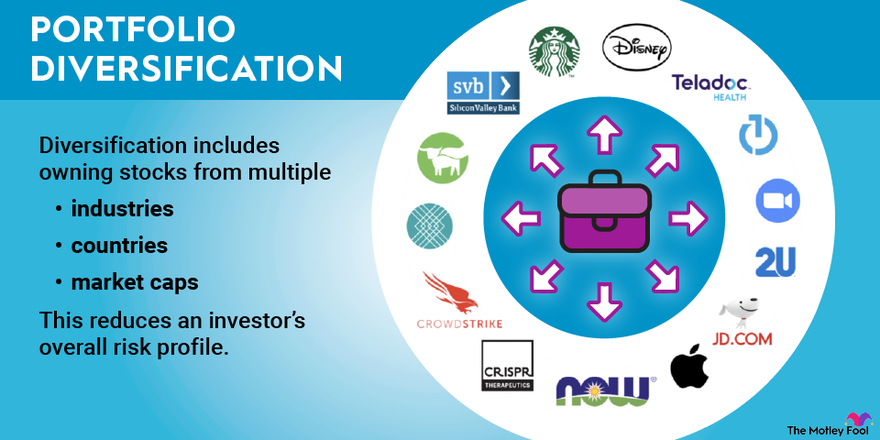
Diversification means spreading investments across multiple asset classes, sectors, and geographic regions to reduce the impact of poor performance in any single area.
Key Benefits of Diversification
- Reduces portfolio volatility
- Protects against market downturns
- Increases risk-adjusted returns
- Provides smoother long-term growth
It’s important to note that diversification does not eliminate risk completely, but it significantly mitigates it.
2. Core Components of a Diversified Portfolio
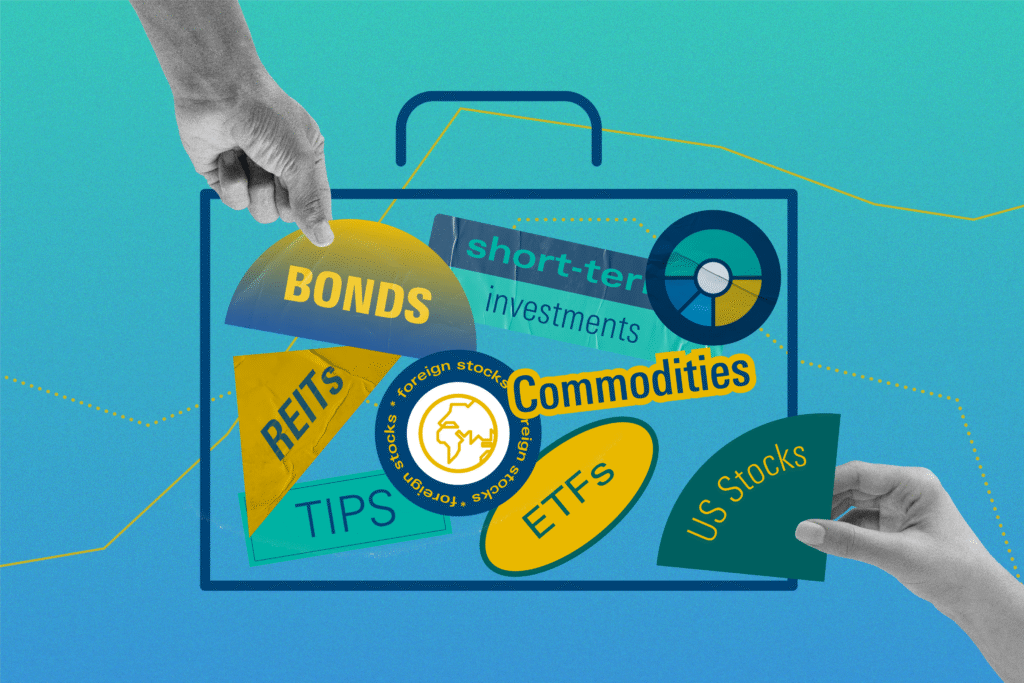
A truly diversified portfolio includes a mix of stocks, bonds, ETFs, mutual funds, and alternative investments.
Stocks
- Large-Cap Stocks: Apple, Microsoft, Johnson & Johnson – provide stability and dividends
- Mid-Cap Stocks: Chipotle, Carvana – offer growth with moderate risk
- Small-Cap Stocks: Roku, Planet Fitness – high growth potential, higher volatility
Bonds
- U.S. Treasury Bonds: Safe-haven assets with fixed interest
- Corporate Bonds: Higher yield, slightly higher risk
- Municipal Bonds: Tax advantages for U.S. investors
ETFs & Mutual Funds
- Allow exposure to broad market sectors
- Reduce company-specific risk
- Examples: SPY (S&P 500 ETF), IWM (Russell 2000 ETF), VTI (Total Stock Market ETF)
Alternative Investments
- Real estate via REITs or crowdfunding platforms
- Commodities like gold, oil, and natural gas
- Cryptocurrencies (if suitable for risk profile)
3. Assessing Risk and Time Horizon
Risk Tolerance
Understanding your risk tolerance is essential.
- Conservative investors: Prefer bonds, large-cap stocks, and dividend-paying assets
- Moderate investors: Balanced mix of stocks, ETFs, and some alternatives
- Aggressive investors: Higher allocation to small-cap stocks, sector-specific ETFs, and alternatives
Time Horizon
- Short-term (0–3 years): Focus on stability and liquidity
- Medium-term (3–10 years): Blend of growth and income assets
- Long-term (10+ years): Heavy focus on growth-oriented stocks and ETFs
Real-Life Example:
A 30-year-old investing for retirement might allocate 70% stocks, 20% bonds, 10% alternatives, while a 60-year-old might reverse that to prioritize safety.
4. Sector Diversification in the U.S. Market
Diversifying across sectors ensures your portfolio isn’t overexposed to one industry.
Key Sectors & Trends (2025)
- Technology: AI, cloud computing, cybersecurity
- Healthcare & Biotech: Pharmaceuticals, telehealth, innovative medical devices
- Financials: Regional banks, fintech, insurance
- Energy & Renewables: Oil, solar, wind
- Consumer Goods: E-commerce, luxury brands, household staples
Example Allocation
| Sector | Allocation (%) |
|---|---|
| Technology | 25% |
| Healthcare | 20% |
| Financials | 15% |
| Energy | 15% |
| Consumer Goods | 15% |
| Cash / Alternatives | 10% |
5. Geographic and International Diversification
Even when focusing on the U.S. market, some exposure to international markets can enhance diversification:
- Global ETFs (e.g., VXUS)
- Emerging market equities (India, China, Brazil)
- Developed international equities (Europe, Japan)
Example:
During the 2020 pandemic, international equities performed differently than U.S. stocks. Investors with global exposure mitigated some losses from U.S.-only portfolios.
6. Tax-Efficient Diversification
Tax considerations are crucial for long-term wealth building.
- 401(k) and IRA Accounts: Tax-deferred growth on U.S. stocks, bonds, and ETFs
- Roth IRA: Tax-free growth for retirement
- Tax-Loss Harvesting: Selling underperforming assets to offset capital gains
- Municipal Bonds: Tax-free interest income
Practical Tip:
Balancing taxable, tax-deferred, and tax-free accounts can maximize after-tax returns while maintaining diversification.
7. Portfolio Construction Strategies
Asset Allocation Models
- Conservative: 40% stocks, 50% bonds, 10% alternatives
- Balanced: 60% stocks, 30% bonds, 10% alternatives
- Aggressive: 80% stocks, 15% bonds, 5% alternatives
Rebalancing
- Periodically adjust allocations to maintain your target mix
- Example: If stocks outperform and exceed your allocation, sell some to rebalance toward bonds or alternatives
Dollar-Cost Averaging
- Investing a fixed amount regularly to reduce timing risk
- Helps smooth out market volatility over time
8. Using ETFs and Mutual Funds for Simplicity
Advantages:
- Instant diversification across hundreds or thousands of stocks or bonds
- Lower transaction costs than buying individual securities
- Examples:
- SPY (S&P 500 ETF): Broad exposure to U.S. large-cap stocks
- VTI (Total Market ETF): Covers U.S. small, mid, and large caps
- BND (Total Bond Market ETF): Exposure to investment-grade bonds
Real-Life Example:
A new investor with $10,000 might split $6,000 in VTI, $3,000 in BND, $1,000 in IWM to achieve diversified exposure quickly.
9. Incorporating Alternatives and Real Assets
Adding non-traditional assets can reduce correlation with equities:
- REITs: Provide income and inflation hedge
- Commodities: Gold, oil, and other resources protect against inflation
- Cryptocurrencies: High-risk, high-reward, suitable for small allocations (<5%)
Example:
During periods of market turbulence, gold and REITs often act as stabilizers for overall portfolio performance.
10. Behavioral Finance: Avoiding Common Pitfalls
Investor psychology significantly impacts returns. Common mistakes include:
- Chasing hot stocks or sectors
- Panic selling during market dips
- Over-concentration in one asset or sector
Tip:
Focus on long-term goals, maintain diversification, and avoid reacting emotionally to short-term market movements.
11. Monitoring and Adjusting Your Portfolio
A diversified portfolio requires continuous review:
- Check performance quarterly
- Adjust for risk tolerance, market trends, and life events
- Monitor sector and asset class performance
Example:
If technology stocks surge and now comprise 40% of your portfolio instead of 25%, rebalance by selling some gains to reinvest in underweighted sectors.
12. Tools and Resources for U.S. Investors
- Brokerage Platforms: Fidelity, Charles Schwab, Vanguard
- Robo-Advisors: Betterment, Wealthfront (automated diversification and rebalancing)
- Research Tools: Morningstar, Yahoo Finance, Seeking Alpha
Practical Tip:
Use automated tools to track asset allocation, diversification, and risk metrics, ensuring your portfolio stays aligned with your goals.
13. Case Study: Diversified U.S. Portfolio Performance
Scenario: $50,000 Investment in 2020
| Asset Class | Allocation | 2020 Return |
|---|---|---|
| Large-Cap Stocks | 40% | +14% |
| Small-Cap Stocks | 20% | +20% |
| Bonds | 25% | +7% |
| REITs | 10% | +2% |
| Commodities | 5% | +8% |
Outcome:
The diversified portfolio achieved 12% overall growth, compared to a 10% return from an all-stock portfolio, while reducing volatility during the COVID-19 market swings.
14. Frequently Asked Questions (FAQs)
1. What is portfolio diversification and why is it important?
Diversification spreads investments across asset classes, sectors, and geographies to reduce risk. It minimizes the impact of any single investment’s poor performance on your overall portfolio. In the U.S. market, combining stocks, bonds, ETFs, and alternative assets ensures smoother returns, protects against market volatility, and increases the probability of achieving long-term financial goals.
2. How do I determine the right asset allocation for my portfolio?
Your allocation depends on risk tolerance, time horizon, and investment goals. Conservative investors favor bonds and dividend-paying stocks, while aggressive investors prioritize growth stocks and alternatives. A balanced approach might include 60% stocks, 30% bonds, and 10% alternatives. Reassess allocations periodically to reflect market conditions and life changes.
3. Should I invest only in U.S. stocks or include international assets?
While U.S. stocks dominate global markets, including international equities and emerging markets enhances diversification. Global exposure reduces correlation with domestic markets, mitigating risk during downturns. Examples include developed markets ETFs or emerging market funds, which provide growth opportunities outside the U.S. economy.
4. How often should I rebalance my portfolio?
Rebalancing is recommended quarterly or semi-annually. It ensures your portfolio maintains the target allocation, prevents overexposure to outperforming assets, and locks in gains. For instance, if stocks surge and now exceed the planned allocation, sell a portion and redistribute to underweighted asset classes like bonds or alternatives.
5. What role do ETFs and mutual funds play in diversification?
ETFs and mutual funds offer instant diversification, as they hold multiple securities across sectors or asset classes. They reduce company-specific risk, provide liquidity, and lower costs compared to purchasing individual stocks. Examples include SPY for large-cap U.S. exposure, VTI for total market coverage, and BND for bonds.
6. How can I make my portfolio tax-efficient?
Use tax-advantaged accounts like 401(k)s, IRAs, and Roth IRAs. Employ tax-loss harvesting to offset gains and consider municipal bonds for tax-free interest income. Proper account selection and asset placement can maximize after-tax returns while maintaining portfolio diversification.
7. Are small-cap stocks too risky for a diversified portfolio?
Small-cap stocks are volatile but offer significant long-term growth. Including 10–20% in small caps balances risk with upside potential. Diversification across sectors, ETFs, and complementary assets like bonds helps mitigate the inherent risk of smaller companies.
8. What alternative investments should I consider?
Alternatives like REITs, commodities, and cryptocurrencies diversify beyond stocks and bonds. REITs provide income and inflation protection, commodities hedge against market uncertainty, and cryptocurrencies offer high-risk, high-reward exposure. Keep alternatives within a 5–15% allocation depending on risk tolerance.
9. How does time horizon affect portfolio construction?
Longer horizons allow for higher allocations to growth assets like stocks, as there’s time to recover from market downturns. Short-term goals require more stable, low-volatility assets such as bonds or cash equivalents to protect capital while earning modest returns.
10. How do interest rates and inflation impact my portfolio?
Rising interest rates generally hurt bonds and high-debt companies, while benefiting banks and certain financial assets. Inflation erodes purchasing power, making equities and real assets like commodities or REITs more favorable. Balancing asset classes based on macroeconomic conditions ensures a resilient portfolio.
15. Conclusion: Building a Portfolio That Withstands Volatility
Diversification is the cornerstone of long-term investing in the U.S. market. By allocating across asset classes, sectors, geographies, and risk profiles, investors can reduce volatility, improve returns, and achieve financial goals. Practical strategies include using ETFs, mutual funds, alternative investments, rebalancing periodically, and maintaining tax efficiency.
The key is to align your portfolio with your risk tolerance and investment horizon, monitor it consistently, and stay disciplined amid market fluctuations. A well-diversified portfolio isn’t just about safety — it’s about capturing growth while protecting your wealth.
Read this also : https://fazi.world/navigating-the-app-economy-a-guide-to-investing-in-us-tech-stocks-and-etfs/