The world of investing can seem like a fortress with high walls and a complex language all its own. Words like “ETFs,” “asset allocation,” and “expense ratios” get thrown around, making it easy to feel like you need a finance degree just to get started. You might be asking yourself: “Is it too late for me?” “Do I have enough money?” or “What if I lose it all?”
Let us be clear: It is never too late to start, you can start with very little, and the biggest risk is not investing at all.
Why? Because of a powerful force called compound interest. Albert Einstein reportedly called it the “eighth wonder of the world.” It’s the process where the money you earn from your investments starts earning its own money. Over time, this creates a snowball effect that can turn modest, regular contributions into significant wealth. By not investing, your money in a standard savings account is likely losing purchasing power due to inflation.
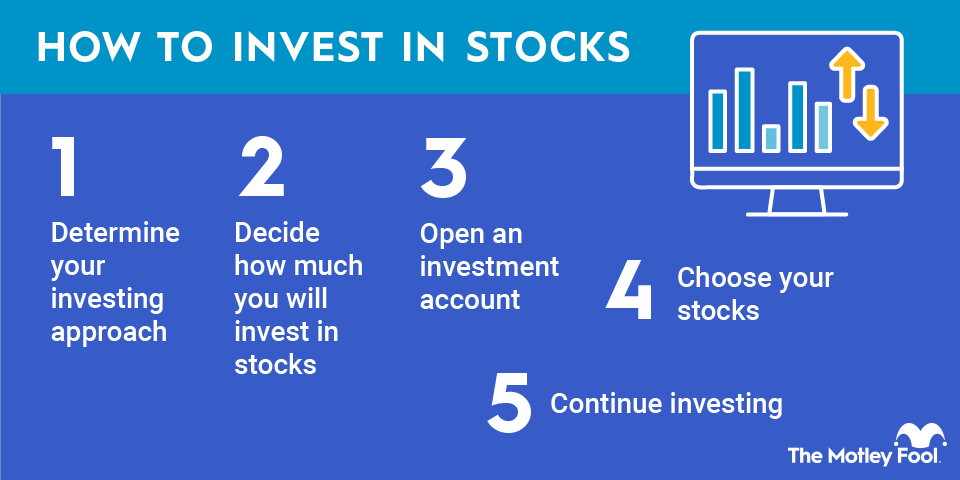
This guide is designed to demystify the process. We will walk you through five clear, logical, and actionable steps to go from being an investing novice to a confident individual who has made their first investment. We will prioritize long-term strategy over short-term gambling, emphasizing security, education, and steady progress.
Step 1: Lay the Foundation – Get Your Finances Investor-Ready
Before you pour money into the markets, you must ensure your personal financial house is in order. Investing is not a substitute for basic financial stability; it’s the next step after achieving it. Jumping in prematurely can lead to panicked decisions, like selling investments at a loss to cover an unexpected emergency.
A. Tame Your Debt
Not all debt is created equal. We can generally categorize it as follows:
- High-Interest Debt (The “Emergency”): This includes credit card debt, payday loans, and personal loans with interest rates often exceeding 10%, 15%, or even 20%. This debt is a financial emergency. The guaranteed return you get by paying it off is far higher and more certain than any expected return from the stock market. Your first investing priority should be to eliminate high-interest debt.
- Moderate-Interest Debt (The “Manageable”): This includes student loans, auto loans, and some personal loans with interest rates in the 5-9% range. A balanced approach is needed here. You might want to pay these down aggressively while also starting to invest, especially if you have access to a 401(k) match (which we’ll discuss later).
- Low-Interest Debt (The “Strategic”): This includes mortgages and federally subsidized student loans with rates below 4-5%. It’s often beneficial to make minimum payments on this debt and invest the extra money, as your investments have a good chance of outperforming the loan’s interest rate over time.
B. Build Your Emergency Fund
An emergency fund is your financial shock absorber. It’s a cash reserve meant to cover unexpected expenses like medical bills, car repairs, or job loss. Without it, you risk derailing your investment plan.
- How Much? Aim for 3-6 months’ worth of essential living expenses. If your income is variable, you’re in a single-income household, or your industry is volatile, lean toward 6 months.
- Where to Keep It? This money should be safe and accessible. A high-yield savings account (HYSA) is the perfect vehicle. HYSAs are offered by online banks and typically pay a much higher interest rate than traditional brick-and-mortar bank savings accounts, while still being FDIC-insured up to $250,000.
C. Understand Your Cash Flow
You need to know how much money you can comfortably invest without stressing your budget. Track your income and expenses for a month or two. The goal is to create a surplus that can be directed toward your investments. A simple budget framework is the 50/30/20 rule:
- 50% for Needs: Rent/mortgage, groceries, utilities, minimum debt payments.
- 30% for Wants: Dining out, entertainment, shopping.
- 20% for Savings & Investments: This includes your emergency fund contributions and, eventually, your investment deposits.
Actionable Takeaway for Step 1: Before you even look at a stock ticker, create a plan to pay off high-interest debt and save up a starter emergency fund of $1,000. Then, build it to a full 3-6 months of expenses while you begin learning about the next steps.
Step 2: Define Your Goals and Risk Tolerance – Your Investment Compass
Investing without a goal is like driving without a destination. You’ll waste a lot of energy and likely end up somewhere you don’t want to be. Your goals and your personal comfort with risk will determine everything about your strategy.
A. Set SMART Investment Goals
Make your goals Specific, Measurable, Achievable, Relevant, and Time-bound.
- Short-Term Goals (1-5 years): Saving for a down payment on a car, a wedding, or a major vacation. For these goals, you’ll likely want to use safer, more liquid investments like high-yield savings accounts or short-term bonds, as you can’t afford a major market downturn.
- Long-Term Goals (5+ years, especially 10+ years): Saving for retirement, a child’s education, or financial independence. These goals have a long time horizon, allowing you to weather market volatility and invest in growth-oriented assets like stocks.
B. Gauge Your Risk Tolerance
Risk tolerance is your ability and willingness to lose some or all of your original investment in exchange for greater potential returns. It’s a blend of your financial capacity and your emotional temperament.
- Financial Capacity: A 25-year-old with a stable job and 40 years until retirement has a high capacity for risk. They have time to recover from market crashes. A 60-year-old nearing retirement has a lower capacity.
- Emotional Temperament: Will you lie awake at night if your portfolio drops 20%? Or will you see it as a buying opportunity? Be honest with yourself. If market swings will cause you to sell in a panic, you need a more conservative portfolio, even if your time horizon is long.
A Simple Risk Quiz:
- If my portfolio lost 20% in one year, I would:
- a) Sell everything to avoid further losses.
- b) Be nervous, but hold tight.
- c) See it as a buying opportunity and invest more.
- My investment time horizon is:
- a) Less than 3 years.
- b) 3-10 years.
- c) 10+ years.
If you answered mostly (a), you have a low risk tolerance. Mostly (b) indicates a moderate risk tolerance. Mostly (c) suggests a high risk tolerance.
Actionable Takeaway for Step 2: Write down your top 3 financial goals and label them as short-term or long-term. Then, take a few online risk tolerance questionnaires (many brokerages offer them) to get a formal assessment of your investor profile.
Step 3: Choose Your Investment Account – The Tax-Smart Vehicle
People often confuse their investment account with the investments they hold inside it. Think of the account as the type of car (e.g., a sedan, an SUV) and the investments as the cargo you put inside it (e.g., stocks, bonds). Choosing the right “car” can save you a fortune on taxes.
A. Retirement Accounts (The Most Important for Long-Term Goals)
These accounts offer significant tax advantages but generally restrict when you can withdraw the money without penalty (age 59½).
- 401(k) (or 403(b) for non-profits):
- What it is: An employer-sponsored retirement plan.
- The Golden Rule: If your employer offers a company match, contribute at least enough to get the full match. This is free money and an instant 100% return on your investment. It’s the single most powerful step you can take.
- Tax Treatment: Contributions are typically made “pre-tax,” reducing your taxable income for the year. You pay taxes when you withdraw in retirement.
- Individual Retirement Arrangement (IRA):
- What it is: An account you open yourself, independent of your employer. Everyone with earned income can open one.
- Traditional IRA: Contributions may be tax-deductible (depending on income and 401(k) participation), and investments grow tax-deferred. You pay taxes upon withdrawal.
- Roth IRA: Contributions are made with after-tax money. The key benefit: All growth and withdrawals in retirement are completely tax-free. This is exceptionally powerful for young investors who are in a lower tax bracket now than they will be in retirement.
B. Standard Brokerage Account (Taxable Account)
- What it is: A flexible investment account with no tax advantages and no restrictions on withdrawals.
- When to use it: Ideal for goals that occur before retirement (e.g., a down payment in 10 years) or for investing after you’ve maxed out your retirement account contributions.
How to Open an Account
We recommend starting with a major, reputable online broker known for low fees, user-friendly platforms, and excellent customer education. Examples include:
- Fidelity
- Vanguard
- Charles Schwab
These institutions are giants in the industry and offer a full range of accounts (IRAs, Brokerage) with access to a vast selection of low-cost investments.
Actionable Takeaway for Step 3: If you have a 401(k) with a match, set up your contribution to capture the full match today. Then, open a Roth IRA at a recommended online broker and set up an automatic monthly contribution, even if it’s just $50.
Step 4: Learn the Core Investment Types – Building Your Portfolio
Now we get to the “cargo” for your account vehicle. For beginners, simplicity and diversification are key. You don’t need to pick individual stocks to succeed. In fact, most professional investors fail to consistently beat the market, so why should you expect to?
The “Set-It-And-Forget-It” Power of Funds
Instead of buying shares of a single company, you can buy a single fund that holds small pieces of hundreds or thousands of companies. This provides instant diversification, reducing your risk.
- Index Funds: A fund designed to track the performance of a specific market index, like the S&P 500 (the 500 largest US companies). It’s a passive investment strategy, which means lower fees.
- Exchange-Traded Funds (ETFs): Very similar to index funds, but they trade like stocks on an exchange throughout the day. For most beginners, ETFs are the ideal building block because they are low-cost, diversified, and easy to buy and sell. An S&P 500 ETF (like VOO or IVV) is a perfect foundation for any US portfolio.
- Mutual Funds: A professionally managed fund that pools money from many investors. While some are excellent and low-cost (like Vanguard’s index mutual funds), they can sometimes have higher fees than ETFs. Many require a minimum initial investment.
The Core Asset Classes
These are the categories of investments you’ll use within your funds.
- Stocks (Equities): When you buy a stock, you own a small piece of a company. Stocks offer the highest potential returns but come with the highest volatility (price swings). Best for long-term growth.
- Bonds (Fixed Income): When you buy a bond, you are essentially loaning money to a government or corporation. In return, they pay you interest. Bonds are generally more stable than stocks but offer lower returns. They provide income and stability to a portfolio.
- Cash & Cash Equivalents: This includes your savings account, money market funds, and Certificates of Deposit (CDs). They offer the highest safety and liquidity but the lowest returns, often not keeping pace with inflation.
The Beginner’s Portfolio: A Simple Blueprint
Based on your risk tolerance from Step 2, you can create a simple, diversified portfolio using just two or three ETFs.
- Aggressive (High Risk Tolerance): 100% in a Total US Stock Market ETF (like VTI) or an S&P 500 ETF (like VOO).
- Moderate (Moderate Risk Tolerance): 70% in a Total US Stock Market ETF (VTI) and 30% in a Total US Bond Market ETF (like BND).
- Conservative (Low Risk Tolerance): 50% in a Total US Stock Market ETF (VTI) and 50% in a Total US Bond Market ETF (BND).
This “lazy portfolio” is incredibly effective and used by countless successful investors. You can adjust the percentages as you age or your goals change.
Actionable Takeaway for Step 4: Research the ticker symbols VTI, VOO, and BND on your broker’s website. Understand what they are and how they provide instant diversification. Decide which one of the three portfolio models above best fits your risk profile.
Read more: Labor Market Paradox: Analyzing the Skills Gap and Automation Trends in Key US Industries
Step 5: Execute Your Plan and Master Your Mindset – The Long Game
You’ve done the preparation. Now it’s time to take action and adopt the habits that will ensure your long-term success.
A. Make Your First Trade
Let’s walk through buying your first ETF in your new IRA or brokerage account.
- Log in to your brokerage platform.
- Find the “Trade” function.
- Select your account (e.g., your Roth IRA).
- Enter the Ticker Symbol (e.g., VTI).
- Select “Buy.”
- Choose Order Type: For beginners, a “Market Order” is fine. It means you are buying at the current market price.
- Enter the Number of Shares: If you have $1,000 to invest and VTI is trading at $250 per share, you can buy 4 shares. Most brokers now allow you to buy fractional shares, so you could also invest the full $1,000 and get 4.0 shares.
- Review and Submit. Confirm the trade.
Congratulations! You are now an investor.
B. Embrace Automation and Consistent Investing
The secret to building wealth is not timing the market, but time in the market. The most powerful strategy for a beginner is dollar-cost averaging (DCA).
DCA means investing a fixed amount of money at regular intervals (e.g., $200 every month), regardless of whether the market is up or down. This smooths out your purchase price over time and eliminates the stress and futility of trying to guess the market’s movements. Set up automatic transfers from your bank account to your investment account to make DCA effortless.
C. Cultivate the Right Investor Mindset
- Ignore the Noise: Financial news is designed to be sensational. Tune out the hype about “hot stocks” and “market crashes.” Stick to your plan.
- Think in Decades, Not Days: Short-term fluctuations are normal. Do not let a 10% market dip scare you out of a 30-year plan. Historically, every market downturn has eventually been followed by a new high.
- Keep It Simple: Resist the urge to make it complicated. Your simple 2-ETF portfolio is likely to outperform most complex strategies over the long run because of its low costs and high diversification.
- Continuous Learning: Read books like The Simple Path to Wealth by JL Collins or The Little Book of Common Sense Investing by John C. Bogle. Follow reputable financial educators, not social media stock-pickers.
Actionable Takeaway for Step 5: Log into your brokerage account right now and place your first trade for one of the core ETFs discussed. Then, immediately set up an automatic, recurring investment for the same fund for next month.
Conclusion: You Have the Map, Now Begin the Journey
You have successfully navigated the five critical steps to start investing in the US:
- You’ve secured your foundation by managing debt and building an emergency fund.
- You’ve defined your compass by setting goals and understanding your risk tolerance.
- You’ve chosen your vehicle by selecting the right tax-advantaged account.
- You’ve selected your cargo by learning about low-cost, diversified ETFs.
- You’ve started the engine by making your first trade and committing to a long-term, automated strategy.
The path to building wealth is not a sprint; it’s a marathon. It requires patience, discipline, and emotional fortitude. But by following this systematic approach, you are no longer gambling. You are making an educated, strategic decision to put your money to work for you, harnessing the most powerful force in finance: compound interest.
Your future self will thank you for starting today.
Read more: The Future of US Retail: A Market Analysis of the Omnichannel Shift and the New Brick-and-Mortar
Frequently Asked Questions (FAQ)
Q1: How much money do I really need to start investing?
A: You can start with very little. Many brokers have no account minimums and allow you to purchase fractional shares of ETFs and stocks. You can open an IRA and make your first investment with $100 or even less. The most important thing is to start the habit.
Q2: Isn’t investing just like gambling?
A: No. Gambling is typically a short-term, speculative activity with odds stacked against you. Investing, when done correctly, is a long-term process of owning pieces of profitable, productive companies that grow in value over time. While there is always risk, a diversified, long-term strategy is based on the historical upward trajectory of the global economy, not chance.
Q3: What’s the difference between a Roth IRA and a Traditional IRA?
A: The key difference is when you pay taxes.
- Roth IRA: You contribute after-tax dollars. Your money grows tax-free, and you pay no taxes on qualified withdrawals in retirement. Ideal if you expect to be in a higher tax bracket later.
- Traditional IRA: You may get a tax deduction now (depending on income), your money grows tax-deferred, and you pay income tax on all withdrawals in retirement. Ideal if you need the tax break today and expect to be in a lower tax bracket in retirement.
For most young investors, the Roth IRA is the superior choice.
Q4: How often should I check my portfolio?
A: Far less than you think. Constantly checking your portfolio can lead to emotional decision-making. Once a quarter is plenty to ensure your automatic investments are going through and your asset allocation is still on target. There is no need to check daily or even weekly.
Q5: What is an “expense ratio” and why does it matter?
A: The expense ratio is the annual fee that all mutual funds and ETFs charge their shareholders. It is expressed as a percentage of your investment in the fund. For example, an expense ratio of 0.03% means you pay $3 per year for every $10,000 you have invested. This fee is automatically deducted. Low fees are critical to your long-term returns. The core ETFs recommended in this guide (like VOO and VTI) have extremely low expense ratios.
Q6: I’m scared of a market crash. What should I do?
A: First, recognize that market corrections (drops of 10%) and bear markets (drops of 20% or more) are a normal, albeit unpleasant, part of investing. They have happened throughout history and the market has always recovered. If you have a long time horizon, a crash is actually an opportunity to buy assets at a discount through your dollar-cost averaging. The worst thing you can do is sell in a panic, locking in permanent losses. Your diversified portfolio is designed to withstand these storms.