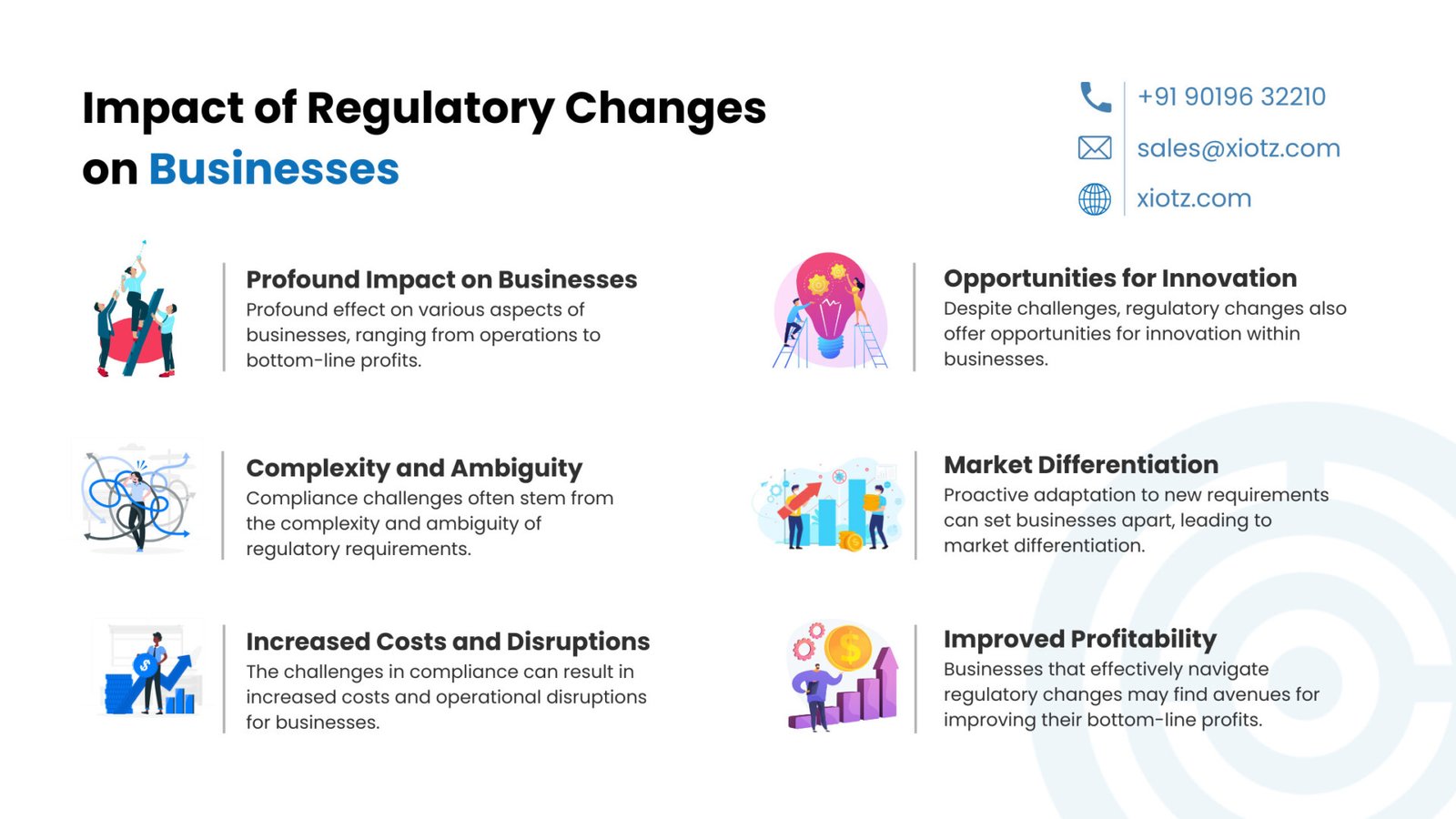
For business leaders operating in the United States, the regulatory environment is more than just a backdrop—it’s a dynamic and often decisive factor in strategic planning. The year 2024 is a pivotal one, characterized not by a single, monolithic shift but by a confluence of significant regulatory developments across multiple domains. From the rapid emergence of artificial intelligence to the escalating demands of climate transparency and a renewed focus on antitrust enforcement, companies are facing a new rulebook.
This article provides a comprehensive analysis of the most critical U.S. regulatory changes in 2024. Our aim is not just to list new rules, but to explore their practical implications, helping executives, entrepreneurs, and investors navigate this complex terrain with confidence. We will dissect the drivers behind these changes, their direct impact on business operations, and the strategic steps organizations can take to not only ensure compliance but also to gain a competitive advantage.
By understanding this evolving landscape, businesses can transform regulatory compliance from a cost center into a source of resilience, innovation, and trust.
Section 1: The Macro View – Understanding the Drivers of the 2024 Regulatory Push
Before diving into specific regulations, it’s crucial to understand the powerful forces shaping the current U.S. regulatory agenda.
- The Acceleration of Technology: The breakneck speed of innovation in AI, data collection, and digital platforms has far outpaced existing laws. Regulators are playing catch-up to mitigate risks related to privacy, bias, security, and market concentration.
- The Climate Imperative: With increasing frequency and severity of climate-related events, there is intense pressure from investors, consumers, and international bodies for the U.S. to formalize its climate response. This is manifesting in mandatory disclosure rules.
- Geopolitical and Economic Resilience: The pandemic and ongoing geopolitical tensions exposed vulnerabilities in global supply chains. A key regulatory focus is now on “de-risking” and reshoring critical industries, from semiconductors to clean energy.
- Evolving Labor Markets: The post-pandemic “Great Reshuffling” and the rise of remote work have prompted a re-examination of labor standards, including worker classification, overtime rules, and non-compete agreements.
- Bipartisan, but Fragmented, Support: While the current administration has been a primary driver, many regulatory areas, particularly concerning China and big tech, enjoy a degree of bipartisan support, ensuring their impact will be felt regardless of the immediate political cycle.
Section 2: The Artificial Intelligence (AI) Frontier – From Wild West to Managed Growth
AI is the defining technological shift of our time, and 2024 marks the beginning of earnest attempts to establish a U.S. regulatory framework.
Key Regulatory Action: The Biden Administration’s Executive Order on Safe, Secure, and Trustworthy AI
Issued in October 2023, this sweeping Executive Order (EO) sets the stage for regulatory action throughout 2024 and beyond. It directs a host of federal agencies to develop standards and rules.
- National Institute of Standards and Technology (NIST): Charged with developing rigorous standards for red-team testing of AI models before public release, focusing on identifying risks like cybersecurity breaches and bio-threats.
- Department of Commerce: Tasked with creating watermarking and content authentication guidelines to clearly label AI-generated content, a critical move to combat deepfakes and misinformation.
- Department of Homeland Security (DHS): Applying AI standards to critical infrastructure sectors.
- Equal Employment Opportunity Commission (EEOC): Actively enforcing existing laws against bias in AI-powered hiring and HR tools.
Impact on Business:
- Tech Developers & Cloud Providers: Will face mandatory safety tests for powerful AI models. They will need to invest heavily in robust compliance and risk-management frameworks, document their data sources, and implement watermarking features.
- All Businesses Using AI (i.e., Most Companies):
- HR & Recruitment: Companies using AI for resume screening or candidate assessment must conduct audits to prove these tools do not perpetuate discriminatory biases, as mandated by the EEOC.
- Marketing & Content Creation: The use of AI-generated content (images, video, text) will require clear disclosure to maintain consumer trust and adhere to forthcoming FTC guidelines on deceptive practices.
- Legal & Risk Management: In-house counsel will need to develop AI use policies, conduct impact assessments for high-risk applications, and ensure contractual safeguards with third-party AI vendors.
Strategic Takeaway: Proactive companies are establishing internal AI governance committees, conducting bias audits on their tools, and training staff on the ethical and compliant use of AI. Viewing AI governance as a core part of corporate responsibility will be a key differentiator.
Section 3: Climate and ESG – The Era of Mandatory Disclosure
The voluntary era of ESG (Environmental, Social, and Governance) reporting is rapidly closing. 2024 is the year when climate disclosure becomes a legal and financial requirement for many.
Key Regulatory Action: The SEC’s Final Climate-Related Disclosure Rule
After two years of intense debate, the U.S. Securities and Exchange Commission (SEC) passed its landmark rule in March 2024. While its implementation is currently paused due to legal challenges, it represents the direction of travel and has already influenced state-level actions and global standards.
- What it Mandates (in phased-in stages):
- Climate-Related Risk Disclosure: Describe climate-related risks that have had or are likely to have a material impact on business strategy, results of operations, or financial condition.
- Governance: Disclose the board’s and management’s oversight of climate-related risks.
- Greenhouse Gas (GHG) Emissions: This is the most significant change. Large accelerated filers will be required to disclose their Scope 1 (direct) and Scope 2 (indirect from purchased energy) emissions. The highly contested requirement for Scope 3 (value chain) emissions was removed from the final rule.
- Financial Statement Metrics: Disclose the financial impact of severe weather events and other natural conditions.
Parallel Action: California’s Climate Disclosure Laws (SB 253 & SB 261)
Going beyond the SEC, California has passed its own, more stringent laws.
- SB 253 (The Climate Corporate Data Accountability Act): Requires public and private companies with annual revenues over $1 billion doing business in California to disclose all three scopes of emissions (1, 2, and 3).
- SB 261 (Climate-Related Financial Risk Act): Requires companies with revenues over $500 million to disclose climate-related financial risks.
Impact on Business:
- Public Companies: Must begin assembling the data, processes, and controls to meet SEC disclosure timelines. This requires collaboration between finance, legal, sustainability, and operations teams.
- Large Private Companies: The California laws effectively pull thousands of private companies into the mandatory disclosure net for the first time.
- Supply Chain & SMEs: The focus on Scope 3 emissions by California means that large companies will demand emissions data from their suppliers. Small and medium-sized enterprises (SMEs) must prepare to be asked for this information to remain viable partners.
Strategic Takeaway: Companies must treat emissions data with the same rigor as financial data. Investing in carbon accounting software and expertise is no longer optional. A robust, data-backed sustainability strategy is becoming a prerequisite for accessing capital, winning large contracts, and maintaining market reputation.
Section 4: Antitrust and Competition – A Return to Aggressive Enforcement
The last decade of perceived laissez-faire antitrust enforcement is over. Federal agencies are now aggressively challenging mergers and business practices they deem anti-competitive.
Key Regulatory Action: Aggressive Stance by the FTC and DOJ
Led by Chair Lina Khan at the Federal Trade Commission (FTC) and Assistant Attorney General Jonathan Kanter at the Department of Justice (DOJ), the approach has shifted fundamentally.
- Revised Merger Guidelines: In late 2023, the agencies issued new guidelines that lower the threshold for challenging mergers, focusing on potential competition, roll-up strategies, and labor market effects.
- Scrutiny of “Big Tech”: Ongoing lawsuits against Google, Meta, and Amazon seek to break up what regulators see as monopolistic ecosystems.
- Focus on Non-Competes: The FTC has issued a proposed rule to ban most non-compete agreements nationwide, arguing they suppress wages and stifle innovation.
Impact on Business:
- M&A Strategy: The cost, timeline, and uncertainty of mergers and acquisitions have increased significantly. Companies must prepare for more rigorous “second requests” and be willing to litigate to close deals. Strategies reliant on serial acquisitions (“roll-ups”) are now high-risk.
- HR and Talent Management: The proposed ban on non-competes could revolutionize labor mobility. Businesses that rely heavily on these clauses must develop new strategies to protect intellectual property and retain talent, such as improved compensation, equity, and culture.
- Partnerships and Data: Even commercial partnerships and data-sharing agreements that could be seen as limiting competition are under the microscope.
Strategic Takeaway: Legal and business development teams must conduct thorough antitrust risk assessments early in the planning of any M&A or major partnership. For talent strategy, the writing is on the wall: reduce reliance on non-competes and build a company people don’t want to leave.
Read more: Labor Market Paradox: Analyzing the Skills Gap and Automation Trends in Key US Industries
Section 5: Data Privacy – The Patchwork Becomes a Quilt
The U.S. still lacks a comprehensive federal data privacy law, but the state-level “patchwork” is expanding so rapidly that it is creating de facto national standards.
Key Regulatory Action: New State Laws and FTC Enforcement
- California, Virginia, Colorado, Utah, Connecticut: These states have active consumer privacy laws, with California’s CPRA being the most robust. Texas, Oregon, and Montana have new laws coming into effect in 2024/2025.
- Universal Opt-Out Mechanisms (UOOMs): Laws in Colorado, California, and others now require companies to recognize global privacy controls (e.g., a browser setting) that signal a user’s opt-out preference for data sales/targeted ads.
- FTC’s Focus on Health Data & Dark Patterns: The FTC is aggressively using its Section 5 authority against unfair and deceptive practices, suing companies for improperly sharing health data and using “dark patterns” to trick users into consent.
Impact on Business:
- Compliance Complexity: Companies operating nationwide must navigate a complex web of slightly different rules regarding consumer rights (access, deletion, opt-out), sensitive data definitions, and opt-out mechanisms.
- Technology Overhaul: Implementing systems to recognize and honor UOOMs requires significant technical investment.
- Increased Litigation Risk: The California CPRA and Illinois BIPA (Biometric Information Privacy Act) allow for private rights of action, leading to a surge in class-action lawsuits.
Strategic Takeaway: The most efficient strategy is to implement a “gold standard” compliance program that meets the requirements of the strictest state law (currently California). This includes having a clear data inventory, a streamlined process for handling consumer requests, and ensuring marketing practices are transparent and free of dark patterns.
Section 6: Labor and Employment – Redefining the Employer-Employee Relationship
The relationship between work and worker is being re-regulated from multiple angles.
Key Regulatory Actions:
- NLRB’s Cemex Decision: This landmark ruling makes it significantly easier for unions to form. If a company commits an unfair labor practice during a union organizing campaign, the National Labor Relations Board can now immediately order the company to recognize and bargain with the union without a formal election.
- New Overtime Rule: The Department of Labor has finalized a rule (effective July 2024) significantly raising the salary threshold for overtime exemption. Millions of employees previously classified as exempt will now be eligible for overtime pay.
- FTC’s Proposed Non-Compete Ban: As mentioned in the antitrust section, this would be a seismic shift in labor markets.
Impact on Business:
- Increased Unionization Risk: Management must be meticulously trained on lawful behavior during organizing campaigns. A single misstep can lead to mandatory union recognition.
- Payroll and Classification Audit: Companies must immediately audit their exempt employees’ salaries. Those below the new threshold ($43,888 on July 1, 2024, rising to $58,656 on January 1, 2025) must be reclassified as non-exempt (and paid overtime) or given a raise to meet the new threshold.
- Budgetary Pressure: The reclassification of employees and the potential rise in collective bargaining will increase labor costs.
Strategic Takeaway: Proactive employee relations, fair compensation practices, and a thorough review of all exempt positions are critical. HR and finance departments must collaborate to model the financial impact of the new overtime rule.
Conclusion: From Compliance to Competitive Advantage
The U.S. regulatory environment of 2024 is undeniably complex, but it is not insurmountable. Businesses that view these changes merely as hurdles to clear will find themselves in a perpetual state of reaction and risk.
The winning strategy is to integrate regulatory intelligence into the core of business planning. Proactive engagement is key:
- Conduct a Regulatory Risk Audit: Identify which of these areas most impact your industry and operations.
- Foster Cross-Functional Collaboration: Compliance is no longer just a legal function. It requires partnership between Legal, HR, Finance, IT, Marketing, and Operations.
- Invest in Data Governance: Whether for GHG emissions or consumer privacy, robust data management systems are the foundation of modern compliance.
- Embrace Transparency: In a world of mandatory disclosures, forward-thinking companies will use transparency as a tool to build trust with consumers, investors, and regulators.
The businesses that will thrive are those that see the new rulebook not as a constraint, but as a map to building a more resilient, trustworthy, and sustainable organization for the future.
Read more: The Future of US Retail: A Market Analysis of the Omnichannel Shift and the New Brick-and-Mortar
Frequently Asked Questions (FAQ)
Q1: The SEC’s climate rule is paused by courts. Should I ignore it for now?
A: Absolutely not. The legal process will take time, but the market forces driving the rule are unchanged. Major investors, customers, and international partners (e.g., under the EU’s CSRD) are demanding this data. Halting your preparation would be a major strategic misstep, creating a scramble later and damaging your credibility.
Q2: My company is privately held and doesn’t operate in California. Do these changes affect me?
A: Yes, likely through your business relationships. If you are a supplier to a large public company or a firm that does operate in California, you will be part of their value chain (Scope 3) emissions reporting and will be expected to provide data privacy assurances. The “trickle-down” effect of regulation is powerful.
Q3: What is the single most urgent action I should take?
A: Conduct a rapid regulatory mapping exercise. Gather leaders from Legal, HR, Finance, and Sustainability. Triage these regulatory areas based on your company’s size, industry, and geographic footprint. This will identify your top 2-3 priorities for immediate action, such as the DOL’s overtime rule or initiating a GHG emissions inventory.
Q4: How can a small business with limited resources possibly keep up?
A: Focus on the highest-impact areas. For most SMEs, this is:
- Labor: Ensure compliance with the new overtime rules.
- Data Privacy: Implement a basic, transparent privacy policy and honor opt-out requests.
- Supply Chain: Begin tracking your primary emissions sources (e.g., electricity, vehicle fleet) to prepare for requests from larger partners.
Leverage free resources from agencies like the SBA and NIST.
Q5: With a potential change in administration after the 2024 election, could these rules be reversed?
A: Some specific rules could be slowed, modified, or defunded. However, many of these trends are bipartisan and global. The focus on China and supply chain resilience, concerns about Big Tech’s power, and the demand for climate transparency from capital markets are not going away. A prudent strategy is to build for the long-term direction, not the short-term political winds.