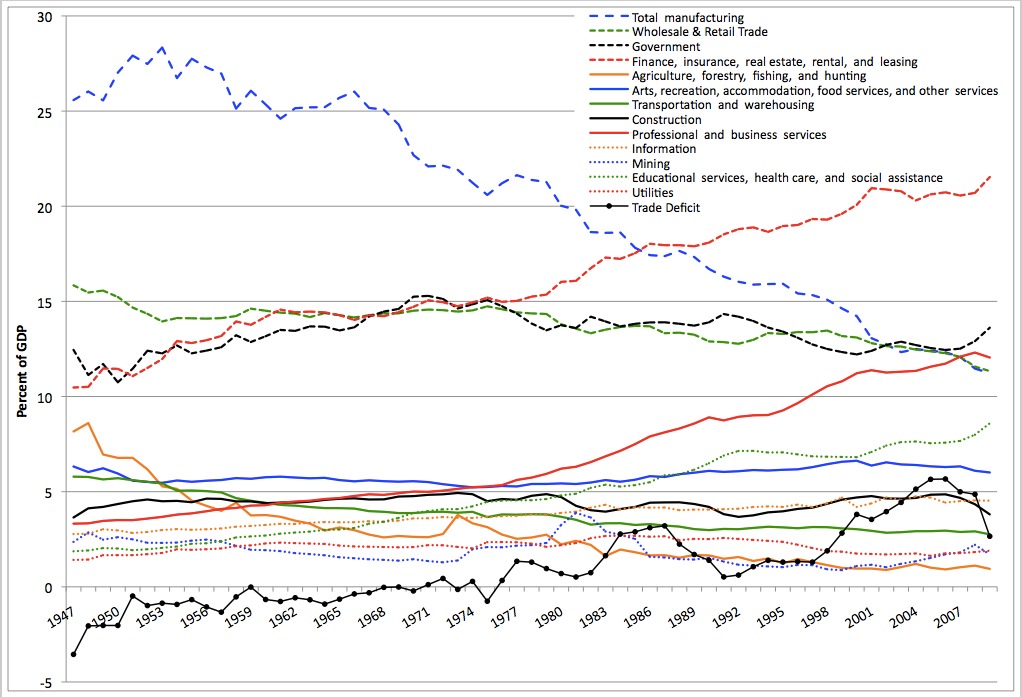
The United States economy is not a monolith. It is a vast, dynamic, and often contradictory ecosystem of interconnected sectors, each pulsing to its own rhythm while simultaneously influencing and being influenced by the whole. Following the seismic shocks of the COVID-19 pandemic, the subsequent unprecedented fiscal and monetary response, and a period of historic inflation, understanding the American economy requires moving beyond headline GDP and unemployment numbers. It demands a granular, sector-by-sector examination.
This article provides a “State of the Union” for the U.S. economy, dissecting its major components to offer a clear, authoritative, and nuanced snapshot. We will delve into the engines of growth, the sectors facing headwinds, and the transformative trends—from the AI revolution to the re-shoring of supply chains—that are reshaping the nation’s economic future. Our analysis is grounded in data from authoritative sources like the Bureau of Labor Statistics (BLS), the Bureau of Economic Analysis (BEA), and the Federal Reserve, and is framed by established economic principles to ensure trustworthiness and clarity.
1. The Pillars of Prosperity: Services, Consumption, and the Labor Market
The U.S. economy is predominantly a services-based, consumer-driven machine. Understanding its core pillars is essential to gauging its overall health.
A. The Mighty U.S. Consumer (Consumer Spending)
The Snapshot: The American consumer remains the primary engine of U.S. economic growth, accounting for roughly two-thirds of Gross Domestic Product (GDP). Despite persistent inflation and higher interest rates, consumer spending has proven remarkably resilient. Retail sales have continued to grow, albeit at a moderating pace, supported by a strong labor market and accumulated savings from the pandemic era.
Key Drivers and Headwinds:
- Labor Market Strength: A low unemployment rate and rising wages have provided a solid foundation for spending. Real wage growth (wages adjusted for inflation) has recently turned positive, easing some pressure on household budgets.
- The “Excess Savings” Drawdown: During the pandemic, government stimulus and reduced spending led to a historic buildup of household savings. This buffer has been a critical shock absorber, allowing consumers to maintain spending levels even as prices rose. However, this pool of savings is largely depleted for lower- and middle-income households, creating a potential vulnerability.
- The Debt Dilemma: As savings dwindle, consumers are increasingly turning to credit cards and other forms of debt to finance their spending. Credit card balances have surged, and delinquency rates are rising from their historic lows, signaling growing financial strain for some segments of the population.
- Shifting Spending Patterns: Post-pandemic, spending has rotated from goods back to services. Consumers are allocating more of their budgets to travel, dining out, entertainment, and healthcare, while demand for goods like home furnishings and electronics has softened.
Outlook: The consumer’s resilience is the key variable for a “soft landing”—the scenario where the Fed tames inflation without triggering a severe recession. The path forward hinges on the labor market’s durability and whether wage growth can continue to outpace inflation.
B. The Services Sector: The Unseen Engine
The Snapshot: Accounting for over 70% of GDP and employment, the services sector is the bedrock of the modern U.S. economy. It encompasses a dizzying array of industries, from healthcare and professional services to hospitality and information technology.
Key Segments:
- Healthcare & Social Assistance: The largest employer within the services sector, this industry is on a steady growth trajectory driven by an aging population. However, it faces challenges like workforce shortages (nurses, caregivers) and soaring costs.
- Professional & Business Services: This includes high-value fields like legal, accounting, architectural, and consulting services. It is a barometer of corporate health; when businesses are investing and expanding, this sector thrives. Recently, it has seen some softening, particularly in temporary help services, which can be a leading indicator of a cooling labor market.
- Leisure & Hospitality: This sector was the epicenter of the pandemic crash and has been the star of the recovery. Employment has largely returned to pre-pandemic levels, and demand for travel and experiences remains robust, though it is sensitive to changes in consumer discretionary income.
- Information & Technology: While “tech” is often considered its own sector, much of its economic activity is classified under services. This includes software publishing, data processing, and streaming services. It continues to be a major driver of innovation and productivity growth.
Outlook: The services sector is expected to continue its steady expansion, though its pace will be tethered to the overall health of the consumer and business investment.
C. The Labor Market: Strong, But Showing Cracks
The Snapshot: The U.S. labor market has been nothing short of remarkable in its recovery from the pandemic. The unemployment rate has hovered near 50-year lows, job creation has been consistently strong, and wage growth has been elevated. This tight labor market has been the primary bulwark against a recession.
Key Dynamics:
- The Great Resignation to the Big Stay: The period of mass voluntary job quitting has subsided, giving way to a “Big Stay” as workers become more cautious in an uncertain economic environment. The quits rate has normalized, indicating reduced worker confidence in finding better opportunities easily.
- Wage-Price Spiral Fears: Rapid wage growth, particularly in service industries, has been a concern for the Federal Reserve, fueling fears of a wage-price spiral. While this has not fully materialized, it remains a key metric being monitored.
- Participation Puzzles: The labor force participation rate—the share of the population working or looking for work—has still not fully recovered to pre-pandemic levels, particularly for older workers who opted for early retirement.
- Cooling, Not Crashing: Recent data shows a gradual cooling. Job openings have declined from their stratospheric peaks, and the pace of monthly job gains has slowed to a more sustainable level. This is a sign of the labor market rebalancing, not collapsing.
Outlook: A gradual softening of the labor market is expected and, from the Fed’s perspective, desirable to relieve inflationary pressures. The critical question is whether this cooling remains controlled or accelerates into a cycle of rising unemployment.
2. Goods-Producing Sectors: Manufacturing, Construction, and Energy
While services dominate, the sectors that produce physical goods are vital for supply chain security, innovation, and high-wage employment.
A. Manufacturing: A Renaissance Amidst Headwinds
The Snapshot: The U.S. manufacturing sector is experiencing a period of profound transition. After decades of offshoring, a combination of geopolitical tensions, supply chain disruptions, and supportive government policy is fueling a push for re-shoring and “friend-shoring.”
Key Trends:
- The CHIPS and Science Act & Inflation Reduction Act (IRA): These landmark pieces of legislation are unleashing a wave of public and private investment in strategic sectors. Billions of dollars are flowing into the construction of semiconductor fabrication plants (fabs) and facilities for electric vehicle (EV) batteries, solar panels, and other clean energy technologies.
- Resilience Over Efficiency: Companies are prioritizing resilient and secure supply chains, even if it comes at a slightly higher cost. This shift is benefiting U.S. manufacturers in critical industries.
- The Robotics and Automation Revolution: To compete with lower-wage nations, U.S. manufacturing is increasingly reliant on advanced robotics and automation, boosting productivity but changing the nature of manufacturing jobs.
- Short-Term Challenges: Despite the long-term optimism, the sector faces immediate headwinds from higher borrowing costs, which dampen investment, and a potential slowdown in global demand for U.S. exports.
Outlook: The manufacturing outlook is bifurcated. The strategic sectors targeted by government policy (semiconductors, clean energy) are booming. In contrast, more cyclical, traditional manufacturing may face a tougher period amid an economic slowdown.
B. Construction: The Housing Conundrum
The Snapshot: The construction industry is a tale of two markets: a booming industrial and infrastructure segment versus a subdued residential housing market, both dictated by the interest rate environment.
Residential Construction:
- The Mortgage Rate Shock: The Federal Reserve’s rate-hiking campaign has sent 30-year mortgage rates to their highest levels in over two decades. This has severely dampened affordability, cooled buyer demand, and slowed the pace of new home construction.
- The “Lock-In” Effect: A unique dynamic of this cycle is the vast majority of existing homeowners have fixed-rate mortgages with rates far below current levels. This disincentivizes them from selling, severely constraining the supply of existing homes for sale and propping up prices despite low demand.
- A Glimmer for Multi-Family: While single-family construction has slowed, the pipeline for multi-family units (apartments) remains robust, as high home prices drive continued demand for rentals.
Non-Residential & Infrastructure Construction:
- The Industrial Boom: Driven by the need for new warehouses, data centers, and manufacturing plants, this segment is thriving.
- The Infrastructure Investment and Jobs Act (IIJA): This $1.2 trillion legislation is providing a multi-year, stable source of funding for public works projects—roads, bridges, ports, and airports—creating a strong tailwind for heavy and civil engineering construction.
Outlook: The residential market’s recovery is inextricably linked to the path of interest rates. The non-residential and infrastructure sectors are poised for several years of strong growth, largely insulated from economic cycles by government spending.
C. Energy: The Quest for Security and Transition
The Snapshot: The U.S. has emerged as the world’s top producer of oil and natural gas, a position of significant geopolitical and economic strength. The sector is navigating volatile global prices while simultaneously undergoing a long-term transition towards renewable sources.
Key Dynamics:
- Production Powerhouse: The shale revolution cemented the U.S. as an energy superpower. This domestic production helps to insulate the economy from global oil price spikes, acting as a shock absorber.
- Price Volatility: Energy prices remain highly sensitive to global events, from OPEC+ decisions to conflicts in key producing regions. This volatility directly impacts inflation and consumer sentiment.
- The Green Transition: The Inflation Reduction Act has turbocharged investment in wind, solar, hydrogen, and other renewable technologies. The energy sector is now a hybrid, with traditional oil and gas giants investing heavily in clean energy projects. This is creating new industries and jobs, particularly in regions suited for solar and wind production.
Outlook: The U.S. energy sector will likely continue its “all-of-the-above” strategy, maximizing traditional production for economic and security benefits while accelerating the build-out of a renewable energy backbone.
Read more: The Regional Divide: A Market Analysis of the Economic Hotspots and Emerging Hubs in the USA
3. The Public Sector: Government’s Expanding Footprint
The role of the federal government in the economy has expanded significantly since the pandemic.
The Snapshot: Government spending at the federal, state, and local levels is a significant component of GDP. The massive fiscal stimulus deployed during the pandemic (CARES Act, American Rescue Plan) has been followed by historic industrial policy bills (IIJA, CHIPS, IRA).
Key Impacts:
- Driving Demand: Government spending directly stimulates economic activity by purchasing goods and services and funding infrastructure projects that improve long-term productivity.
- Influencing Private Investment: The tax credits and subsidies in the IRA and CHIPS Acts are directing hundreds of billions of dollars in private capital towards specific strategic priorities, effectively shaping the future of U.S. industry.
- The Debt Debate: This expansive fiscal policy has come at a cost. The national debt has surged, and the cost of servicing that debt is rising rapidly as interest rates increase. This long-term challenge will eventually require difficult fiscal choices.
Outlook: With the legislative agenda largely complete, the focus now shifts to implementation. The sheer scale of this government-directed investment will be a defining feature of the U.S. economic landscape for the next decade.
4. The Financial Sector: Navigating Higher Interest Rates
The financial system is the circulatory system of the economy, and the Fed’s medicine for inflation has changed its pressure.
The Snapshot: The Federal Reserve’s aggressive interest rate hikes have ended the era of “free money.” This has profoundly impacted every part of the financial ecosystem, from banks and Wall Street to Main Street businesses and consumers.
Key Impacts:
- Banking Sector Stress: The rapid rise in rates contributed to the failures of several regional banks in 2023, as the value of their long-term bond holdings plummeted. While the immediate crisis was contained, it revealed vulnerabilities and has led to tighter lending standards.
- The Credit Crunch: As banks become more cautious, they are pulling back on lending to businesses and consumers. This credit tightening is a deliberate, if painful, transmission mechanism of the Fed’s policy, designed to slow the economy and curb inflation.
- Wall Street vs. Main Street: Higher rates have dampened activity in interest-rate-sensitive areas like commercial real estate (especially office space) and have made it more difficult for startups to raise venture capital. The IPO market has been largely quiet.
- Strong Dollar: Higher U.S. interest rates have attracted global capital, strengthening the U.S. dollar. This makes U.S. exports more expensive for foreign buyers but helps to curb inflation by making imports cheaper.
Outlook: The financial sector will remain under pressure as long as interest rates remain high. The health of regional banks and the commercial real estate market are key areas to watch for potential contagion risk.
Conclusion: An Economy at a Crossroads
The State of the U.S. Union is one of remarkable resilience confronting significant uncertainty. The consumer has defied expectations, the labor market remains historically strong, and a wave of public and private investment is poised to reshape the nation’s industrial base. These are powerful forces for continued growth.
Yet, headwinds are gathering. The full impact of the Fed’s rate hikes is still working its way through the system. Consumer resilience is being tested by depleted savings and rising debt. The global economic environment is fragile.
The central narrative of the current moment is the Federal Reserve’s high-stakes battle against inflation. The desired outcome is a “soft landing”—a gradual cooling that preserves job gains while restoring price stability. The alternative is a recession, either triggered by overtightening or necessitated by persistent inflation.
The U.S. economy stands at a crossroads, balanced between the enduring strength of its innovative spirit and consumer might, and the powerful, lagged effects of monetary policy. Its path in the coming months will be determined by which of these forces proves stronger.
Read more: Decoding the American Consumer 2025: A Market Analysis of Post-Inflation Spending Habits
Frequently Asked Questions (FAQ)
1. Is the U.S. economy in a recession?
As of the latest data, no, the U.S. economy is not in a recession. A recession is typically defined as a significant decline in economic activity spread across the economy, lasting more than a few months, and visible in real GDP, real income, employment, industrial production, and wholesale-retail sales. While growth has slowed and some sectors are struggling, the economy continues to expand, and the labor market remains strong. This is why the term “soft landing” is being used to describe the potential outcome.
2. Why are people saying the economy is bad if the data is strong?
This is a critical disconnect often called the “vibecession.” Several factors contribute to this:
- High Prices (Inflation): Even if inflation is slowing, the price level remains significantly higher than it was three years ago. People feel this daily at the grocery store, at the gas pump, and when paying rent. Wages have only recently caught up for some.
- Higher Interest Rates: The cost of borrowing for cars, homes, and credit cards has skyrocketed, making major life purchases feel out of reach for many.
- Media Narrative: Persistent talk of a potential recession can create a sense of anxiety, regardless of the current data.
- Partisan Politics: Economic perceptions are often heavily influenced by political affiliation.
3. What is the “soft landing” I keep hearing about?
A “soft landing” is a term used by economists to describe the scenario where a central bank (like the Federal Reserve) successfully slows down an overheating economy and brings down high inflation without triggering a significant rise in unemployment or a full-blown recession. It is a difficult policy feat to achieve, as the primary tool—raising interest rates—is a blunt instrument that can easily slow the economy too much.
4. How do high interest rates actually slow down the economy?
High interest rates work like a brake on the economy by making borrowing more expensive. This has a ripple effect:
- Consumers: Fewer people take out mortgages and car loans, and credit card debt becomes more costly. This reduces spending.
- Businesses: Companies postpone investments in new equipment, factories, or hiring because the cost of financing these projects is too high.
- Housing: The housing market cools rapidly as mortgage rates rise.
By reducing demand across the economy, this process helps to ease the upward pressure on prices, thus reducing inflation.
5. What are the biggest risks to the U.S. economy right now?
- Persistent Inflation: If inflation proves stickier than expected, it could force the Fed to raise rates further or hold them high for longer, increasing the risk of a severe downturn.
- A Geopolitical Shock: An escalation of conflict in Ukraine or the Middle East, or a crisis in the Taiwan Strait, could disrupt energy supplies and global trade, reigniting inflation and damaging confidence.
- Commercial Real Estate Crisis: The value of office buildings has plummeted due to remote work and high interest rates. If this leads to widespread defaults, it could severely stress regional banks that hold these loans.
- Consumer Deleveraging: If overstretched consumers are forced to sharply cut spending to pay down debt, it could create a negative feedback loop in the economy.
6. What sectors are expected to see the most growth in the next 5-10 years?
Based on current trends and policy, high-growth sectors are likely to include:
- Clean Energy & Climate Tech: Driven by the Inflation Reduction Act.
- Semiconductors & Advanced Manufacturing: Driven by the CHIPS Act and re-shoring efforts.
- Artificial Intelligence & Machine Learning: Pervasive technology impacting every sector from healthcare to finance.
- Healthcare & Biotech: Driven by an aging population and continued innovation.
- Cybersecurity: As digitalization expands, the need to protect systems grows exponentially.