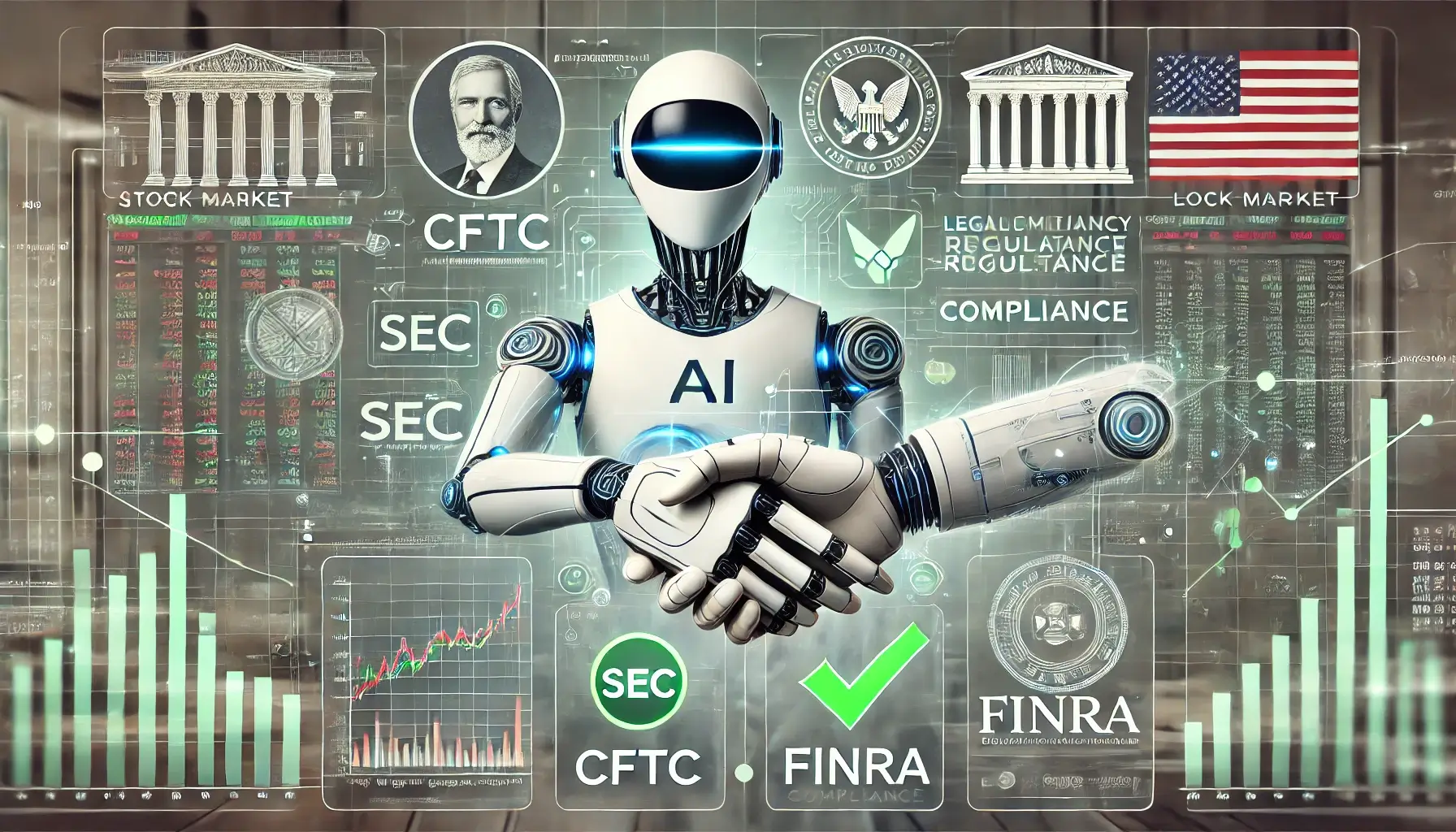
The integration of Artificial Intelligence (AI) into financial markets is no longer a scene from science fiction; it is the dominant reality. From high-frequency trading firms executing millions of orders per second to quantitative hedge funds deploying deep learning to predict market movements, AI-driven trading now accounts for a substantial portion of daily volume on U.S. exchanges. This technological revolution promises unprecedented efficiency, liquidity, and the potential for superior returns. However, it also introduces a complex web of novel risks, regulatory challenges, and ethical quandaries.
At the helm of overseeing this seismic shift is the U.S. Securities and Exchange Commission (SEC). Under the leadership of Chairman Gary Gensler, the SEC has made it abundantly clear that AI is a primary focus, placing the entire ecosystem of algorithmic and AI-driven trading “on the watch.” For asset managers, hedge funds, proprietary trading firms, and even sophisticated retail traders, understanding the legal boundaries of this new frontier is not just a competitive advantage—it is a matter of compliance and survival.
This article provides a deep dive into the legal dos and don’ts of AI-driven trading in the USA. We will dissect the current regulatory stance, explore the core legal principles that remain paramount, and outline a practical compliance framework to help market participants innovate responsibly under the SEC’s vigilant gaze.
Understanding the Regulatory Terrain: Why the SEC is Focused on AI
Before delving into specific rules, it’s crucial to understand the “why” behind the SEC’s intense scrutiny. Chairman Gensler, a former MIT professor who taught a course on AI and finance, has repeatedly highlighted several systemic risks inherent to widespread AI adoption in trading:
- The “Network Effect” Risk: The financial industry’s tendency to herd around a few dominant data aggregators or AI models creates a dangerous homogeneity. If countless trading firms are using similar models and data sources, they could all react in the same way to market stimuli, amplifying volatility and leading to flash crashes or broader systemic instability.
- Conflict of Interest Risk: This is the centerpiece of the SEC’s current concerns. An AI-driven optimization tool used by a broker-dealer could be subtly tuned to prioritize the firm’s profitability (e.g., through higher transaction costs or routing orders to affiliated venues) over the client’s best interest, violating fiduciary duties. The AI might make these decisions in ways that are opaque to both the client and the firm’s own compliance officers.
- Fraud and Manipulation Risk: AI models can be used to engage in new forms of market manipulation. For instance, a sophisticated generative AI could create and disseminate false but highly credible financial news to move a stock price. Furthermore, complex algorithmic patterns could be used to engage in spoofing (bidding or offering with the intent to cancel before execution) or layering at a scale and speed impossible for humans.
- Opacity and “Black Box” Problem: Many advanced AI models, particularly deep neural networks, are notoriously difficult to interpret. When a trading model makes a disastrous or illegal decision, it can be nearly impossible for regulators (or even the firm’s own management) to determine why. This opacity fundamentally challenges core principles of accountability and supervisory control.
With these risks in mind, the SEC is not creating an entirely new rulebook from scratch. Instead, it is applying and interpreting existing securities laws through the lens of AI, while also proposing new, targeted regulations.
The Foundational Legal Framework: Laws That Apply to AI Trading
AI-driven trading does not operate in a legal vacuum. It is subject to the same bedrock statutes that have governed U.S. markets for decades. The key is understanding how these laws manifest in an AI context.
- The Securities Exchange Act of 1934: This is the primary statute governing secondary market trading. Key provisions include:
- Section 10(b) and Rule 10b-5: The anti-fraud provisions. It is unlawful to “employ any device, scheme, or artifice to defraud,” make untrue statements, or engage in any practice that “operates as a fraud or deceit.” An AI model designed to create manipulative trading patterns falls squarely under this rule.
- Market Manipulation Rules: Rules like 15c1-2 against fictitious quotes and the general anti-manipulation principles apply directly to algorithmic strategies that can spoof or layer orders.
- The Investment Advisers Act of 1940: This governs the conduct of investment advisers. The core principle here is the fiduciary duty, which includes a duty of care and a duty of loyalty.
- Duty of Care: Requires an adviser to provide advice that is in the best interest of the client, based on a reasonable investigation into the investment. Using an untested or poorly understood AI model could breach this duty.
- Duty of Loyalty: Requires an adviser to eliminate or disclose all conflicts of interest. As mentioned, an AI model that optimizes for the adviser’s revenue creates a clear conflict that must be managed.
- Regulation Systems Compliance and Integrity (Reg SCI): While primarily applying to large exchanges and clearing agencies, Reg SCI sets a de facto standard for the robustness, resilience, and security of mission-critical technological systems. Firms operating significant AI trading infrastructure would be wise to adopt Reg SCI-like principles, even if not legally required to do so, to demonstrate robust governance.
Read more: Catch-Up Contributions and Other Smart Moves for Americans Over 50
The Dos: A Proactive Compliance Framework for AI-Driven Trading
Navigating this environment requires a proactive and comprehensive approach. Here are the essential “Dos” for any firm leveraging AI in its trading strategies.
1. DO Implement Robust Model Governance and Risk Management
Treat your AI models as critical financial instruments, not just software.
- Model Inventory and Documentation: Maintain a detailed inventory of all AI/ML models used in trading, including their purpose, data sources, and key personnel. Document the model’s design, development process, and testing results thoroughly.
- The Three Lines of Defense:
- First Line (Business/Developers): Model developers and traders are responsible for initial testing, validation, and ongoing monitoring.
- Second Line (Risk/Compliance): An independent risk management function must establish model risk policies, validate models before deployment, and conduct periodic reviews.
- Third Line (Internal Audit): Internal audit should periodically assess the effectiveness of the overall model governance framework.
- Pre-Trade and Post-Trade Controls: Implement hard-coded risk limits (e.g., position size, volume, loss thresholds) that the AI cannot override. Conduct rigorous post-trade analysis to detect anomalous behavior or “model drift,” where the model’s performance degrades over time as market conditions change.
2. DO Prioritize Explainability and Interpretability
The “black box” problem is your biggest legal and regulatory vulnerability.
- Invest in XAI (Explainable AI): Actively research and implement techniques like LIME (Local Interpretable Model-agnostic Explanations) or SHAP (SHapley Additive exPlanations) to generate insights into why a model makes a specific decision.
- “Right-Sizing” Explainability: The level of required explainability may vary. A simple linear regression model might be inherently interpretable, while a deep learning model may require sophisticated XAI techniques. The key is that someone within the organization must be able to explain, in plain English, the primary drivers of the model’s decisions, especially when things go wrong.
- Document Rationale: For every trade or strategy driven by AI, ensure there is a documented, logical rationale that can be presented to regulators. If the only explanation is “the model said so,” you are on thin ice.
3. DO Scrutinize Data Sourcing and Integrity
An AI model is only as good as the data it consumes. Flawed data leads to flawed and potentially illegal outcomes.
- Provenance and Rights: Know where your data comes from. Do you have the legal right to use it for commercial trading? Using scraped or purchased data without proper licensing can lead to intellectual property disputes.
- Bias and Representativeness: Actively test your training and input data for biases. If your data is not representative of the broader market, your model may develop skewed strategies that perform poorly in certain conditions or, worse, create unfair market outcomes.
- Data Quality Controls: Implement automated data validation checks to identify and filter out anomalies, missing data, or potential manipulation in your data feeds.
4. DO Manage Conflicts of Interest Transparently
This is a direct response to the SEC’s primary concern.
- Identify All Potential Conflicts: Map out every point where your firm’s financial interests might diverge from your clients’. This includes how an AI model routes orders, allocates trades, selects investments, or optimizes for metrics like gross revenue vs. net returns for the client.
- Eliminate or Disclose: The preferred method is to eliminate the conflict through structural changes (e.g., using a neutral order routing system). If elimination is not possible, you must provide full and fair disclosure, in plain language, to your clients, obtaining their informed consent.
- Test and Monitor: Regularly test your AI systems to ensure they are not, even inadvertently, optimizing for the firm’s benefit over the client’s. This testing should be an ongoing process, not a one-time event.
5. DO Prepare for Inquiries and Examinations
Assume the SEC will ask to see your AI. Be prepared.
- The “AI Briefing Book”: Create a comprehensive, up-to-date document that explains your AI strategies in clear, non-technical language. It should cover the points above: governance, explainability, data, and conflict management.
- Preserve Everything: Maintain detailed logs of model development, training data sets, decision logs, and trade records. The SEC will expect a complete audit trail.
- Designate a Knowledgeable Point of Contact: Ensure you have staff who can effectively communicate with SEC examination staff about both the technical aspects of your AI and the compliance framework surrounding it.
The Don’ts: Pitfalls That Will Attract SEC Enforcement
Just as important as the “Dos” are the critical mistakes to avoid.
1. DON’T Deploy a Model You Don’t Understand
This is the cardinal sin of AI trading. Blindly using a third-party AI “black box” without any internal understanding of its mechanics is an enormous liability. If the model engages in manipulative trading or causes significant losses, “the vendor made me do it” will not be a valid defense. The firm remains ultimately responsible for the actions of its algorithms.
2. DON’T Over-Relate on Back-Testing Alone
A model that performed spectacularly on historical data is no guarantee of future success or compliance. Markets evolve, and a strategy that was profitable and lawful in the past may become loss-making and manipulative in the future. Use back-testing as one component of a broader validation process that includes scenario analysis, stress-testing, and forward-looking walk-forward analysis.
3. DON’T Ignore the Potential for Unintended Manipulation
Even with benign intent, an AI model can learn manipulative behaviors if that is what the data rewards. For example, a model trained to maximize profit might discover that placing and quickly canceling large orders (spoofing) is an effective way to move prices. It is your responsibility to monitor for these emergent behaviors and implement controls to prevent them.
4. DON’T Make Unsubstantiated Claims About Performance
Marketing an AI-driven fund or strategy comes with significant responsibility. Avoid making vague or exaggerated claims like “AI-powered super-intelligence” or “guaranteed returns.” All promotional materials must be fair, balanced, and not misleading. You must be able to substantiate any performance or capability claims with robust data and evidence.
5. DON’T Set It and Forget It
AI models are not fire-and-forget weapons. They require constant supervision, monitoring, and updating. The concept of “model drift” is critical; a model that was compliant and effective last month may not be today. Continuous monitoring for performance degradation, changes in market structure, and new regulatory guidance is essential.
The Future is Now: The SEC’s Proposed Rules and Beyond
The SEC is not sitting idly by. Several proposed rules directly target the risks of AI and predictive data analytics.
- Proposed Rules on Predictive Data Analytics (2023): This is the most significant regulatory development on the horizon. The proposal would require broker-dealers and investment advisers to:
- Identify and Eliminate Conflicts: Identify any conflict of interest associated with their use of covered technologies (which includes AI and predictive analytics) that places the firm’s interest ahead of the investor’s.
- Adopt Policies and Procedures: Implement written policies to ensure they do not use a technology in a way that places their interest ahead of the investor’s.
- Evaluate and Test: Evaluate whether their use of technology optimizes for investor interactions and test the effectiveness of their policies.
While the final form of this rule is still being debated, its intent is clear: to place an affirmative obligation on firms to root out AI-driven conflicts.
Conclusion: Navigating with Foresight and Responsibility
The integration of AI into trading is an unstoppable force that holds immense promise. However, operating in this space requires a new level of diligence, transparency, and ethical consideration. The SEC’s watchful eye is not meant to stifle innovation but to ensure that this powerful technology is harnessed in a way that protects investors, maintains fair and orderly markets, and promotes capital formation.
The path forward is clear: embrace a culture of robust governance, prioritize explainability, manage conflicts with unwavering integrity, and prepare for intense regulatory scrutiny. By adhering to the legal dos and don’ts outlined here, market participants can not only avoid the pitfalls of enforcement actions but also build more resilient, trustworthy, and ultimately more successful AI-driven trading enterprises. The future belongs to those who can master not just the code of the algorithm, but also the code of conduct.
Read more: The Great Withdrawal: Your Guide to US Required Minimum Distributions (RMDs)
Frequently Asked Questions (FAQ)
Q1: As a retail trader using AI-powered tools from my broker (like robo-advisors or screening tools), what should I be aware of?
- A: Understand that these tools may optimize for the broker’s interests (e.g., routing orders to generate payment for order flow). Read the disclosures provided by your broker about how these tools work and any potential conflicts. Remember, you are still ultimately responsible for your investment decisions, and “the algorithm told me to” is not a defense against a bad trade.
Q2: Can I be held liable if an open-source AI model I use for trading engages in manipulative trading?
- A: Yes, absolutely. The use of an open-source model does not absolve you of liability. You are responsible for understanding, testing, and monitoring any tool you deploy in the market. The SEC will hold the market participant (you/your firm) accountable, not the anonymous developer of the open-source code.
Q3: How does the SEC’s focus on AI differ from its existing rules on algorithmic trading?
- A: The SEC’s existing rules, like Regulation ATS and certain market access rules, focus more on the mechanics of electronic trading—speed, controls, and system integrity. The new focus on AI targets the decision-making core of the trading—the opacity, potential for emergent manipulation, and embedded conflicts of interest that are unique to self-learning and complex predictive models.
Q4: What is the single most important thing a small hedge fund can do to comply?
- A: Implement a formal, documented Model Risk Management framework. It doesn’t have to be as complex as a large bank’s, but it must exist. This should include a clear process for pre-deployment validation, explicit risk limits that are hard-coded into the system, and a schedule for periodic model review. Documenting this process is critical to demonstrating a good-faith compliance effort to regulators.
Q5: The proposed SEC rules on “Predictive Data Analytics” seem broad. Could they affect simple tools like a basic stock screener?
- A: Potentially, yes. The proposal’s definition of “covered technology” is intentionally broad to be technology-agnostic. It encompasses any “analytical, technological, or computational function, algorithm, model, correlation matrix, or similar method or process that optimizes for, predicts, guides, forecasts, or directs investment-related behaviors or outcomes.” A sophisticated stock screener that uses predictive factors could fall under this umbrella, depending on its functionality. The key will be the final rule’s specifics and any provided exemptions.
Q6: Is there a regulatory “safe harbor” for firms that can demonstrate a strong compliance framework, even if their AI makes a mistake?
- A: There is no formal “safe harbor” specifically for AI mistakes. However, the SEC’s enforcement actions are not automatic. They consider factors like intent, recklessness, and the firm’s overall compliance culture. A firm that can demonstrate a robust, good-faith effort to manage risks—through comprehensive governance, testing, and controls—will be in a far better position than one that is negligent. A documented compliance program is your best defense.