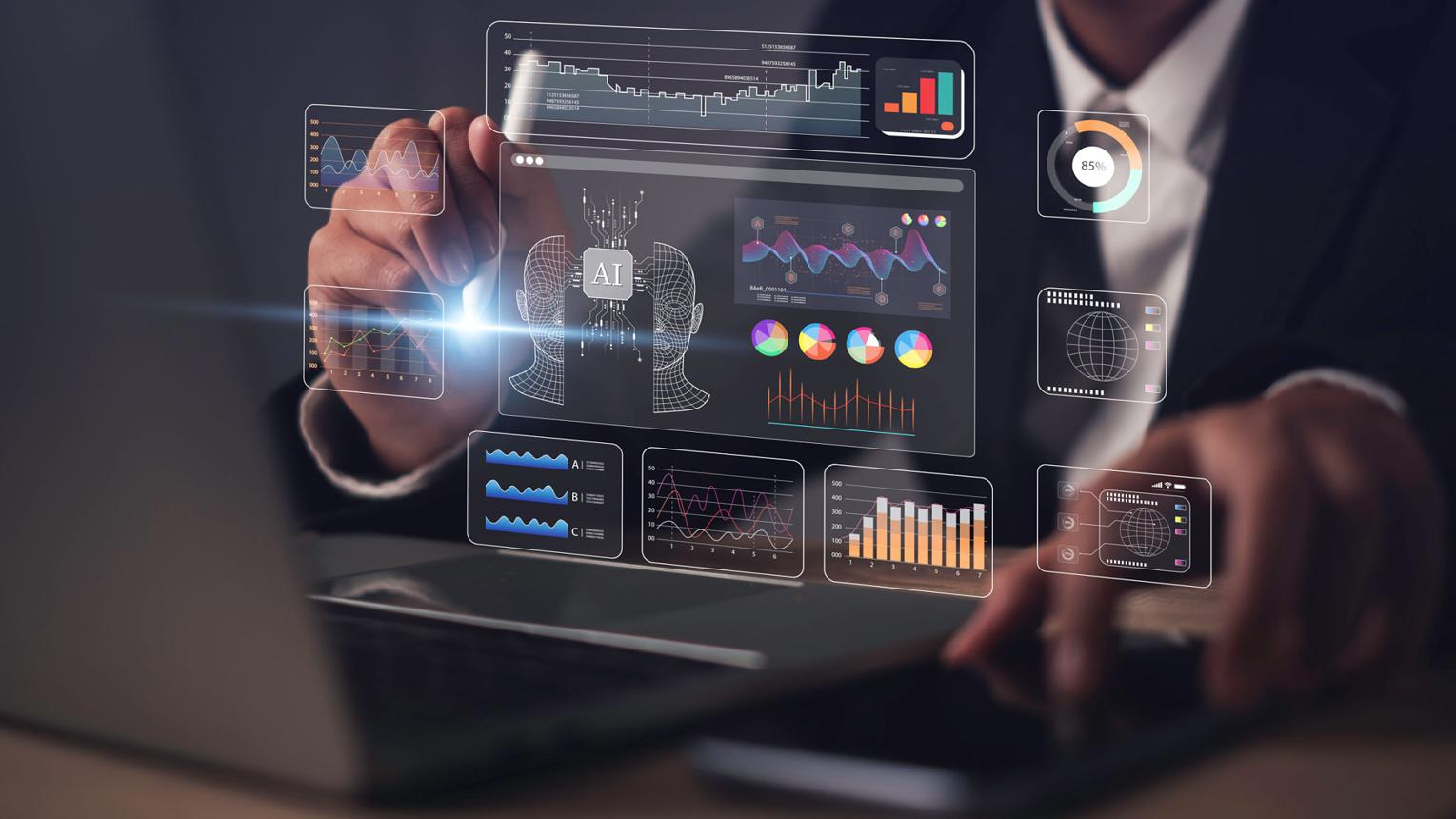
Artificial intelligence is transforming how financial markets are analyzed, shifting decision-making from intuition to data-driven precision. From pattern recognition to predictive modeling, AI tools now assist investors, analysts, and institutions in navigating volatility, improving efficiency, and uncovering insights. Understanding how AI works in market analysis helps investors evaluate opportunities, manage risk, and stay competitive in an increasingly technology-driven financial landscape.
The Evolution of Market Analysis in the Age of AI
For decades, market analysis relied heavily on human interpretation—technical charts, macroeconomic indicators, and fundamental research. While these methods remain relevant, the scale and speed of today’s financial data have made traditional approaches increasingly difficult to sustain on their own.
Artificial intelligence has entered this landscape not as a replacement for human judgment, but as an augmentation tool. Machine learning algorithms can process millions of data points in seconds, identifying patterns that would be nearly impossible for a human analyst to detect manually.
In the U.S., institutional investors—including hedge funds and asset managers—have been early adopters. According to a 2024 report from Deloitte, over 60% of large financial institutions now integrate AI into some aspect of their trading or market analysis workflows.
What Exactly Does AI Do in Market Analysis?
At its core, AI in market analysis focuses on identifying patterns, predicting outcomes, and optimizing decisions. It does this through a combination of machine learning, natural language processing (NLP), and advanced statistical modeling.
AI systems can analyze:
- Historical price data across multiple asset classes
- Real-time market movements and volatility patterns
- News sentiment and earnings reports
- Social media trends influencing retail investor behavior
- Macroeconomic indicators such as inflation and interest rates
Unlike traditional models, AI systems continuously learn. As new data enters the system, the models refine themselves, improving accuracy over time.
For example, a quantitative trading firm might use AI to detect subtle correlations between commodity prices and currency movements—relationships that are not always obvious through conventional analysis.
Real-World Applications Across Financial Markets
AI is no longer experimental—it is actively used across multiple areas of market analysis in the U.S. financial system.
1. Equity Market Analysis
AI models help identify undervalued stocks by analyzing earnings reports, price momentum, and industry trends simultaneously. Firms like BlackRock and Goldman Sachs use AI-assisted tools to support portfolio management decisions.
2. Algorithmic Trading
Algorithmic trading systems powered by AI can execute trades within milliseconds based on predefined conditions. These systems are particularly valuable in high-frequency trading environments where speed is critical.
3. Risk Management
AI enhances risk assessment by simulating thousands of potential market scenarios. This helps institutions better prepare for downturns or unexpected volatility.
4. Sentiment Analysis
Natural language processing allows AI to scan news articles, earnings calls, and even social media platforms to gauge market sentiment. For example, sudden shifts in sentiment around a company can signal potential price movements.
How AI Improves Decision-Making for Investors
One of the most practical benefits of AI is its ability to support more informed decision-making without removing human oversight.
Investors using AI-driven platforms can:
- Receive data-backed trade signals
- Identify trends earlier than traditional indicators
- Reduce emotional bias in decision-making
- Monitor multiple markets simultaneously
For retail investors in the U.S., this has translated into increased access to tools that were once limited to institutional players. Platforms now offer AI-based insights that simplify complex data into actionable information.
However, it is important to note that AI does not eliminate risk. Instead, it helps structure decision-making around probabilities rather than assumptions.
Common Questions Investors Are Asking
Many U.S. investors are actively searching for clarity on how AI fits into their investment strategies. Below are some of the most relevant questions addressed in practical terms.
Is AI trading better than human trading?
AI excels at processing data and identifying patterns quickly, but human judgment remains essential for interpreting broader economic context and managing long-term strategy.
Can AI predict the stock market accurately?
AI can improve forecasting models, but it cannot predict markets with certainty. Financial markets are influenced by unpredictable events such as geopolitical shifts and policy changes.
Is AI trading safe for beginners?
AI tools can support beginners, but they should be used as guidance—not as fully automated decision-makers. Understanding the basics of investing remains critical.
Limitations and Risks of AI in Market Analysis
Despite its advantages, AI is not without limitations. Overreliance on automated systems can introduce new types of risk.
One major concern is model overfitting, where an AI system performs well on historical data but fails in real-world conditions. Another issue is data quality—AI systems are only as reliable as the data they are trained on.
There are also broader concerns around market stability. If too many participants rely on similar AI-driven strategies, it can lead to crowded trades and increased volatility.
Additionally, regulatory oversight in the U.S. is still evolving. Organizations like the SEC are actively assessing how AI impacts market fairness and transparency.
Practical Example: How AI Is Used in Daily Trading Decisions
Consider a portfolio manager overseeing a diversified U.S. equity portfolio. Instead of manually reviewing hundreds of stocks, the manager uses an AI platform that:
- Flags companies with unusual trading volume
- Highlights shifts in earnings sentiment
- Identifies correlations between sectors
The manager then reviews these insights and decides whether to adjust allocations. In this scenario, AI acts as a filter—narrowing down options rather than making final decisions.
This hybrid approach is becoming the standard across the industry.
The Role of Data in AI-Driven Analysis
Data is the foundation of AI. The expansion of alternative data sources has significantly increased the effectiveness of AI models.
These sources include:
- Satellite imagery tracking retail store traffic
- Credit card transaction data indicating consumer spending trends
- Supply chain data revealing production bottlenecks
Such data allows AI systems to generate insights before traditional financial reports are released.
In the U.S., hedge funds have increasingly invested in alternative data to gain a competitive edge. According to estimates from McKinsey, spending on alternative data in asset management has grown by over 40% in recent years.
What This Means for the Future of Market Analysis
AI is not replacing analysts—it is reshaping the role. Analysts are now expected to interpret AI-generated insights rather than manually gather data.
This shift is also influencing education and hiring in the finance industry. Skills in data science, programming, and quantitative analysis are becoming as important as traditional financial knowledge.
For investors, the key takeaway is not whether to use AI, but how to use it effectively. Understanding its strengths and limitations is essential for making informed decisions.

Frequently Asked Questions
1. What is AI market analysis?
AI market analysis uses machine learning and data algorithms to evaluate financial markets and identify patterns.
2. How do hedge funds use AI?
They use AI for predictive modeling, risk management, and high-speed trading strategies.
3. Can AI replace financial analysts?
No, AI supports analysts but does not replace human judgment and strategic thinking.
4. Is AI trading legal in the U.S.?
Yes, but it must comply with SEC regulations and market rules.
5. What are AI trading platforms?
They are tools that use algorithms to analyze markets and provide trading insights or automation.
6. How accurate are AI predictions?
They improve probability-based forecasting but cannot guarantee outcomes.
7. What data does AI use in trading?
It uses price data, economic indicators, news sentiment, and alternative datasets.
8. Is AI useful for long-term investing?
Yes, particularly for identifying trends and optimizing portfolio allocation.
9. What are the risks of AI trading?
Model errors, poor data quality, and overreliance on automation.
10. Do retail investors need AI tools?
Not necessarily, but they can enhance analysis and efficiency when used properly.
A Measured Perspective on AI’s Expanding Influence
Artificial intelligence is steadily becoming part of the infrastructure behind modern financial markets. Its value lies not in replacing human expertise, but in enhancing clarity, speed, and analytical depth. Investors who understand how to integrate AI thoughtfully—rather than depend on it blindly—are better positioned to navigate increasingly complex market environments.
Key Insights at a Glance
- AI enhances, rather than replaces, traditional market analysis
- Institutional adoption in the U.S. is already widespread
- Data quality and model design are critical to reliability
- Retail investors now have access to AI-powered tools
- Risks include overfitting, data bias, and market crowding
- Human oversight remains essential for strategic decisions