
Artificial intelligence is steadily transforming how Wall Street analyzes data, manages risk, and executes trades. Rather than replacing human investors, AI is augmenting decision-making through pattern recognition, predictive modeling, and automation. This article explores how AI-driven tools are influencing trading strategies, what investors should understand today, and how this shift is redefining market behavior across institutions and individual portfolios.
The Subtle Shift: From Human Intuition to Data-Led Decision Making
Artificial intelligence has not stormed Wall Street with dramatic headlines—it has quietly integrated itself into the fabric of trading. Over the past decade, financial institutions have increasingly relied on machine learning models to interpret vast datasets that human analysts simply cannot process in real time.
Historically, trading strategies leaned heavily on experience, intuition, and macroeconomic indicators. Today, those inputs still matter—but they are increasingly supplemented by algorithms capable of analyzing millions of data points per second. These include price movements, earnings reports, economic indicators, and even alternative datasets such as satellite imagery or supply chain signals.
The shift is less about replacing human expertise and more about augmenting it. Portfolio managers are now working alongside data scientists, using AI tools to validate hypotheses, identify inefficiencies, and reduce emotional bias in decision-making.
What Is AI Trading—and How Does It Actually Work?
At its core, AI trading involves the use of machine learning models and advanced statistical techniques to identify patterns in financial markets and make predictions or execute trades accordingly.
Unlike traditional algorithmic trading, which follows predefined rules, AI systems can learn and adapt over time. They continuously refine their models based on new data, improving accuracy and responsiveness.
In practical terms, AI trading systems typically:
- Analyze historical and real-time market data
- Detect patterns that may signal price movements
- Optimize trade execution timing
- Adjust strategies dynamically based on market conditions
For example, a hedge fund might use AI to detect subtle correlations between commodity prices and currency fluctuations—relationships that are difficult for humans to identify consistently.
Where AI Is Making the Biggest Impact on Wall Street
AI’s influence is not uniform—it is concentrated in areas where data complexity and speed are critical.
1. Quantitative Trading Strategies
Quant funds have been early adopters of AI, using machine learning to refine trading models. Firms like Renaissance Technologies and Two Sigma have long relied on data-driven approaches, but AI has expanded their capabilities significantly.
Machine learning models can now process non-linear relationships and adapt to changing market dynamics, making quantitative strategies more flexible than traditional statistical models.

2. Risk Management
AI is helping institutions better understand and manage risk by:
- Simulating thousands of market scenarios
- Identifying hidden correlations between assets
- Predicting potential drawdowns under stress conditions
This is particularly valuable during periods of market volatility, where traditional models may fail to capture rapid changes.
3. Trade Execution Optimization
Execution quality can significantly impact returns. AI systems optimize trade timing and routing by analyzing liquidity, order book dynamics, and transaction costs in real time.
For instance, an AI model may break a large order into smaller trades executed across multiple venues to minimize market impact.
4. Alternative Data Integration
One of AI’s most transformative roles is its ability to process alternative data sources, such as:
- Social media sentiment
- Satellite images of retail parking lots
- Shipping and logistics data
- Web traffic trends
These inputs provide a more nuanced view of economic activity, often before it is reflected in traditional financial metrics.
Real-World Example: AI in Action
Consider a large asset management firm managing a diversified equity portfolio. Traditionally, analysts would evaluate companies based on earnings, guidance, and macroeconomic conditions.
With AI integration, the process evolves:
- Natural language processing models analyze earnings call transcripts for tone and sentiment
- Machine learning models detect anomalies in financial statements
- Alternative data sources provide early signals of demand shifts
For example, a sudden increase in shipping activity detected via logistics data might signal rising demand before quarterly earnings are released. The AI system flags this insight, allowing portfolio managers to adjust positions proactively.
This does not eliminate human judgment—it enhances it by providing deeper, faster insights.
How AI Is Changing the Role of Human Traders
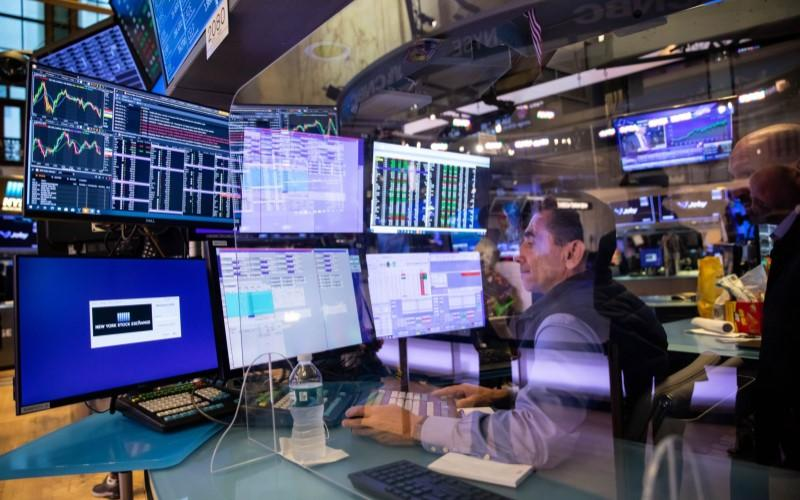
Contrary to early fears, AI has not eliminated the need for human traders. Instead, it has redefined their role.
Today’s traders are increasingly focused on:
- Interpreting AI-generated insights
- Designing and refining models
- Managing edge cases where models may fail
- Overseeing risk and compliance
Human expertise remains essential, particularly in understanding context, regulatory considerations, and unexpected market events.
In many ways, trading is becoming a hybrid discipline—part finance, part data science.
The Benefits—and the Limitations—of AI Trading
AI offers clear advantages, but it also introduces new challenges that investors should understand.
Key Benefits
- Speed and Scale: AI can process massive datasets instantly
- Reduced Bias: Decisions are less influenced by emotions
- Adaptability: Models can evolve with changing market conditions
- Enhanced Precision: Improved trade execution and timing
Notable Limitations
- Data Dependence: Poor data quality can lead to flawed outputs
- Model Risk: AI systems can overfit or misinterpret patterns
- Lack of Transparency: Some models operate as “black boxes”
- Market Feedback Loops: Widespread use of similar models can amplify volatility
For example, during periods of extreme market stress, AI systems may react in similar ways, potentially contributing to rapid price swings.
What This Means for Individual Investors
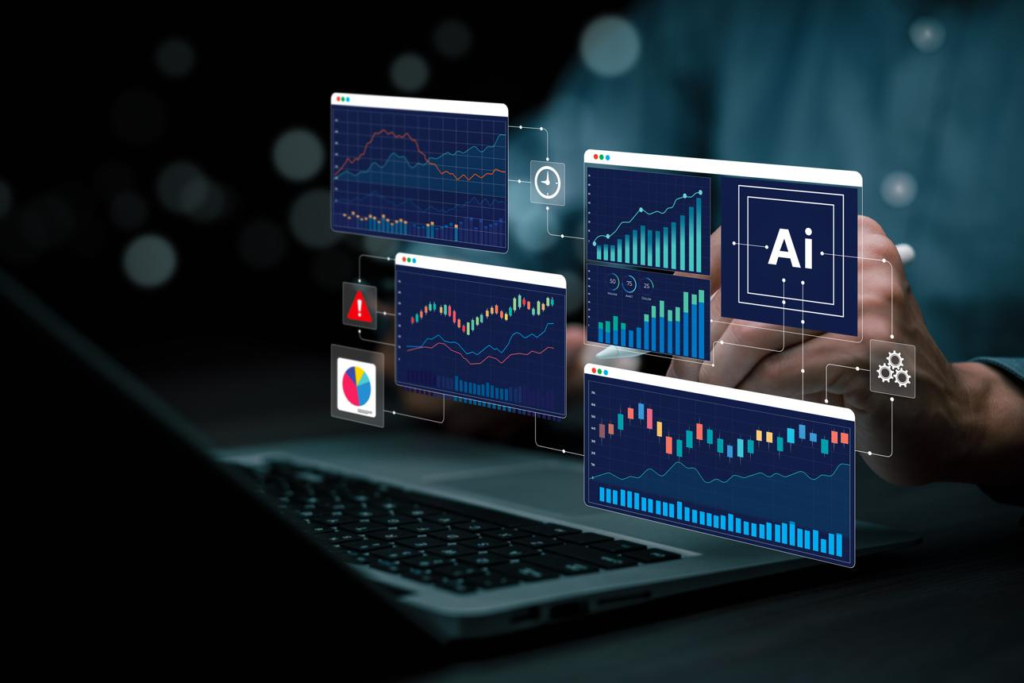
While AI trading is often associated with large institutions, its influence is increasingly reaching retail investors through brokerage platforms and investment tools.
Today, individual investors can access:
- AI-powered portfolio recommendations
- Automated rebalancing tools
- Predictive analytics dashboards
- Robo-advisors that incorporate machine learning
However, accessibility does not eliminate the need for critical thinking. Investors should treat AI tools as decision-support systems rather than decision-makers.
A practical approach is to use AI insights to supplement, not replace, fundamental research and long-term investment planning.
Are Markets Becoming More Efficient—or More Fragile?
One of the most debated questions is whether AI is making markets more stable or more complex.
On one hand, AI improves efficiency by:
- Reducing pricing discrepancies
- Increasing liquidity
- Enhancing information flow
On the other hand, it introduces new risks:
- Algorithmic crowding
- Flash crashes driven by automated systems
- Increased correlation between assets
The reality is likely a combination of both. AI is making markets smarter—but also more interconnected and, at times, more sensitive to rapid changes.

Regulatory and Ethical Considerations
As AI becomes more embedded in financial systems, regulators are paying closer attention.
Key areas of focus include:
- Transparency of AI models
- Fairness and bias in decision-making
- Systemic risk posed by automated trading
- Data privacy and security
Regulatory bodies such as the SEC are increasingly evaluating how AI impacts market integrity and investor protection.
For institutions, this means balancing innovation with accountability—ensuring that AI systems are not only effective but also explainable and compliant.
Frequently Asked Questions
1. What is AI trading in simple terms?
AI trading uses machine learning algorithms to analyze market data and make or support trading decisions.
2. Is AI trading only used by hedge funds?
No. While hedge funds are major users, AI tools are increasingly available to retail investors through modern platforms.
3. Does AI guarantee better investment returns?
No. AI improves analysis but does not eliminate risk or ensure profits.
4. How does AI differ from traditional algorithmic trading?
Traditional algorithms follow fixed rules, while AI systems learn and adapt over time.
5. Can AI predict stock market movements accurately?
AI can identify patterns and probabilities but cannot predict markets with certainty.
6. Is AI trading safe for individual investors?
It can be useful, but it should be used alongside independent research and risk management.
7. What are the biggest risks of AI trading?
Model errors, data issues, lack of transparency, and systemic risks.
8. Are jobs in trading being replaced by AI?
Roles are evolving rather than disappearing, with greater emphasis on data and technology.
9. How do robo-advisors use AI?
They use algorithms to manage portfolios, rebalance assets, and optimize investment strategies.
10. Will AI dominate financial markets in the future?
AI will likely play an increasing role, but human oversight will remain essential.
The Quiet Evolution of Market Intelligence
AI is not a sudden disruption—it is a gradual evolution that is reshaping how markets operate from within. Its influence is most visible not in bold predictions, but in subtle improvements: faster analysis, smarter execution, and more informed decisions.
For investors, the key is not to chase technology, but to understand it. AI is a tool—powerful, but not infallible. Those who learn to work alongside it, rather than rely on it blindly, will be better positioned to navigate increasingly complex financial markets.
Key Insights at a Glance
- AI enhances, rather than replaces, human decision-making in trading
- Machine learning enables more adaptive and data-driven strategies
- Institutions use AI heavily in risk management and execution
- Retail investors are gaining access to AI-powered tools
- AI introduces both efficiency gains and new systemic risks
- Human oversight remains critical in all AI-driven trading environments