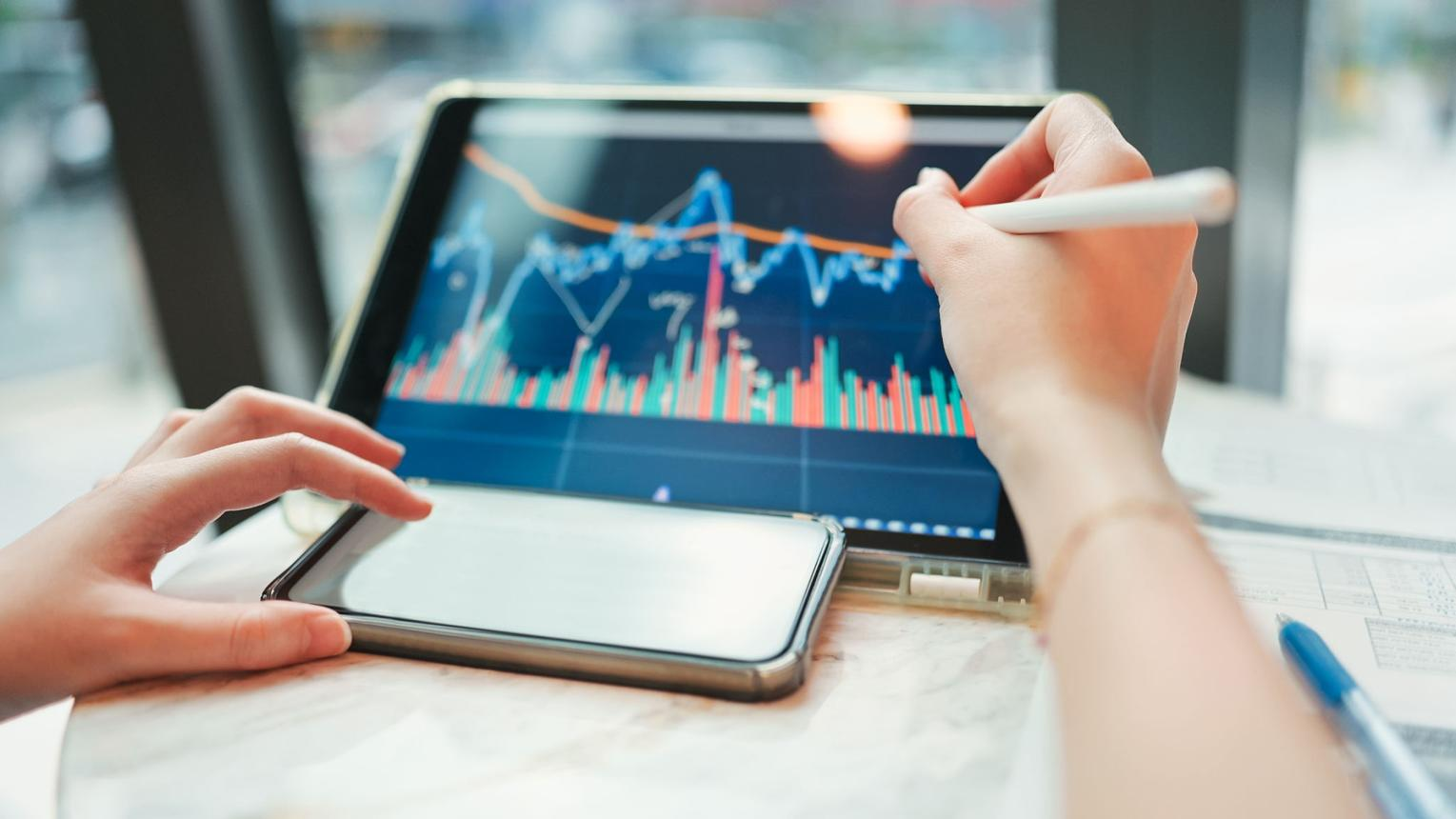
Retail investors across the United States are increasingly adopting AI trading tools to help manage market research, reduce emotional decision-making, and analyze large amounts of financial data more efficiently. Rather than replacing human judgment, most modern AI trading platforms are being used as decision-support systems that assist with timing, risk management, portfolio monitoring, and strategy testing in increasingly volatile market conditions.
The Quiet Shift Happening Inside Retail Investing
Over the last several years, artificial intelligence has moved from being a niche Wall Street technology into something everyday investors can access from a laptop or smartphone. In 2026, this shift is becoming more noticeable — not because retail traders are loudly discussing it, but because AI-powered investing tools are increasingly becoming part of normal investing workflows.
For many Americans, the appeal is practical rather than speculative. Investors are not necessarily looking for “fully automated riches.” Instead, they are looking for better ways to process information, avoid impulsive trading decisions, and manage risk in markets that often react faster than humans can interpret.
This trend is unfolding at a time when financial markets have become heavily influenced by rapid news cycles, interest rate changes, geopolitical developments, and algorithm-driven trading activity. Retail investors are realizing that competing in modern markets often requires tools capable of analyzing data continuously.
At the same time, the technology itself has become more accessible. Many brokerages, fintech companies, and investing platforms now integrate AI-assisted features directly into their dashboards. Tasks that once required institutional-grade software are increasingly available to ordinary investors through subscription-based platforms or built-in brokerage tools.
What Exactly Are AI Trading Tools?
AI trading tools are software systems that use machine learning, predictive analytics, automation, or natural language processing to assist investors with trading-related decisions.
Importantly, most retail-focused AI systems are not fully autonomous trading robots. Instead, they are often designed to support human decision-making.
Common AI trading capabilities now include:
- Market trend analysis
- Automated technical pattern recognition
- Sentiment analysis from news and social media
- Risk management alerts
- Portfolio rebalancing suggestions
- Trade journaling and performance analytics
- Backtesting trading strategies
- Real-time market scanning
Some tools focus on long-term investing, while others are built for active traders operating in fast-moving markets like options, forex, or cryptocurrency.
In the U.S., adoption has accelerated partly because investors now have easier access to APIs, cloud computing, and affordable SaaS-based trading platforms.
Why Retail Investors Are Becoming More Interested in AI
Information Overload Has Become a Real Problem
One major factor driving adoption is the sheer amount of market information investors must process daily.
Retail investors today monitor:
- Federal Reserve announcements
- Earnings reports
- Inflation data
- Economic indicators
- Social media sentiment
- Breaking geopolitical news
- Sector rotation trends
- Institutional trading behavior
Human attention has limits. AI systems, however, can scan multiple data sources simultaneously and identify patterns that may otherwise go unnoticed.
For example, a swing trader monitoring semiconductor stocks may use an AI scanner that detects unusual volume activity, sector-wide momentum shifts, and earnings sentiment changes before manually reviewing charts.
This does not guarantee profitable trades, but it can improve efficiency.
Emotional Decision-Making Continues to Hurt Performance
Behavioral finance research has repeatedly shown that emotional reactions often damage long-term investment performance.
Fear during downturns and overconfidence during rallies remain common retail investing challenges.
Many AI tools are gaining popularity because they help create more structured decision-making processes.
Examples include:
- Position sizing alerts
- Automated stop-loss recommendations
- Risk exposure monitoring
- Rule-based trade entries
- Strategy consistency tracking
Instead of making decisions based entirely on emotion, investors can rely on predefined systems supported by data analysis.
This is especially important during periods of heightened volatility.
According to research published by FINRA and behavioral finance studies from Morningstar, emotional trading remains one of the primary reasons many retail investors underperform market benchmarks over long periods.
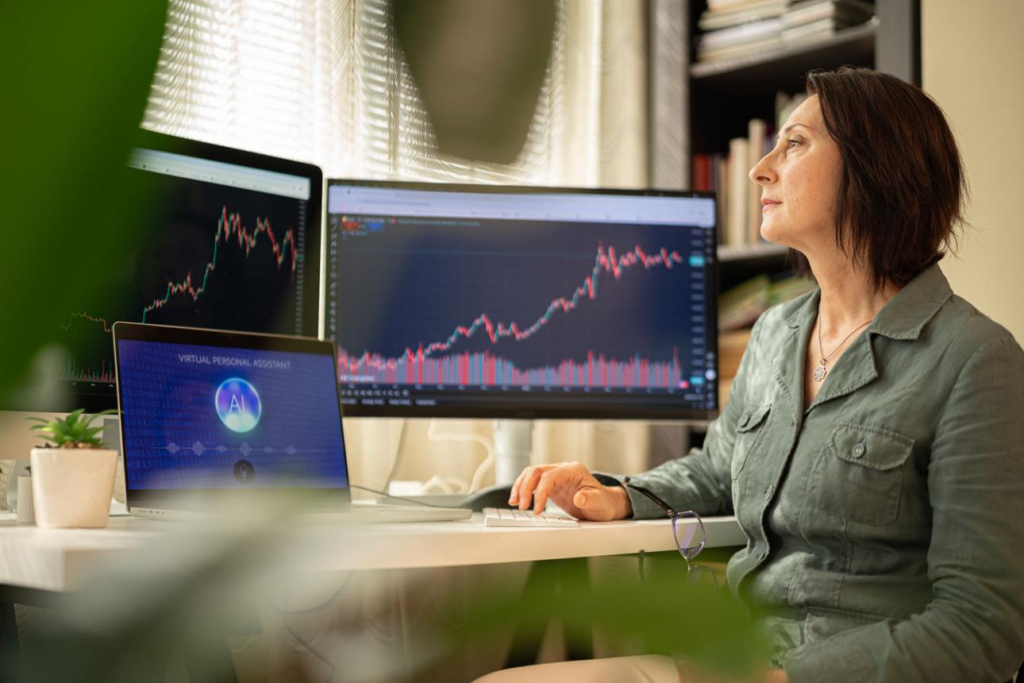
AI Is Changing the Way New Investors Learn Markets
Another reason AI tools are spreading quickly is education.
In previous years, beginner traders often relied on YouTube personalities, chat rooms, or scattered online advice. Many newer AI platforms now provide integrated educational assistance.
Some systems can:
- Explain technical indicators
- Summarize earnings calls
- Generate trading reports
- Identify historical chart similarities
- Simulate hypothetical trade outcomes
For example, a newer investor learning options trading may use AI-assisted software to analyze implied volatility patterns and historical win rates before placing a trade.
This creates a more interactive learning environment than static tutorials alone.
The Rise of AI-Assisted Portfolio Management
Long-term investors are also entering the AI space.
Many Americans are not day trading. They are managing retirement accounts, taxable portfolios, and diversified investment strategies.
AI-assisted investing tools are increasingly being used for:
- Tax-loss harvesting suggestions
- Portfolio diversification analysis
- Asset allocation monitoring
- Dividend optimization
- Risk-adjusted performance analysis
Robo-advisors helped introduce this concept years ago, but newer systems offer significantly deeper personalization.
Some platforms now adapt recommendations dynamically based on changing market conditions, inflation expectations, or investor risk tolerance.
This matters because younger investors increasingly expect digital financial tools to function similarly to other intelligent consumer technologies they already use daily.
Are AI Trading Tools Actually Effective?
This remains one of the most searched questions among retail investors.
The answer is nuanced.
AI tools can improve efficiency, research speed, and analytical consistency. However, they do not eliminate market risk or guarantee profitable outcomes.
Several realities remain important:
AI Works Best With Structured Strategies
Investors who already follow disciplined systems often benefit the most.
For example:
- Momentum traders may use AI scanners for setup detection.
- Long-term investors may use AI risk analysis tools.
- Options traders may use volatility forecasting systems.
AI tends to enhance structured decision-making rather than replace it entirely.
Markets Constantly Change
Financial markets are adaptive systems. Strategies that work in one market environment may stop working later.
An AI model trained on historical conditions may struggle during unexpected macroeconomic shifts or black swan events.
This became particularly evident during periods of abnormal volatility earlier in the decade.
Data Quality Matters
AI systems are only as reliable as the data feeding them.
Poor-quality datasets, delayed feeds, or flawed assumptions can produce misleading signals.
This is why experienced investors still combine AI analysis with independent judgment.
How Professional Traders Are Influencing Retail Behavior
Retail investors increasingly observe institutional trading behavior.
Large hedge funds, quantitative firms, and asset managers have relied on algorithmic systems for years. As public awareness of institutional AI usage grows, retail investors are becoming more comfortable adopting simplified versions of similar technologies.
This does not mean retail traders are competing directly with billion-dollar quantitative funds.
Instead, many are adopting smaller-scale tools that improve workflow efficiency.
Examples include:
- AI earnings analyzers
- Automated watchlist generators
- News sentiment scanners
- Pattern-recognition dashboards
- Portfolio risk calculators
The psychological shift is important. AI is increasingly viewed as a standard investing tool rather than a futuristic experiment.

The Subscription Economy Behind AI Trading Platforms
Another major reason for the rise of AI investing tools is business accessibility.
Many platforms now operate under affordable monthly subscription models.
Instead of requiring institutional-level infrastructure, investors can access:
- Cloud-based dashboards
- Browser-based chart analysis
- AI-generated alerts
- Mobile trading assistants
- API-connected brokerage integrations
This dramatically lowered entry barriers for retail users.
Some investors spend less than the cost of a streaming subscription each month to access advanced analytical tools previously reserved for professionals.
However, costs can still add up depending on platform complexity and trading frequency.
Common Concerns Investors Still Have
Despite growing adoption, skepticism remains healthy and necessary.
Overreliance on Automation
One risk is blindly trusting automated recommendations.
Markets contain unpredictable variables that AI cannot always interpret accurately.
Experienced investors usually treat AI outputs as informational rather than authoritative.
Hidden Marketing Hype
The AI investing industry has also attracted exaggerated marketing claims.
Many platforms advertise unrealistic success rates or imply guaranteed performance.
This is why investors increasingly look for:
- Transparent backtesting
- Verified performance data
- Clear risk disclosures
- Realistic expectations
- Independent reviews
Regulatory and Privacy Questions
As AI tools process more personal financial information, concerns about data security and regulatory oversight continue growing.
American investors are paying closer attention to how platforms store data, execute trades, and comply with financial regulations.
What Types of Investors Are Using AI Most Often in 2026?
The adoption trend spans multiple age groups and investing styles.
However, several categories stand out:
Active Swing Traders
These users often rely on:
- Momentum scanners
- Technical pattern recognition
- Volatility alerts
- Trade journaling analytics
Part-Time Retail Investors
Busy professionals increasingly use AI tools because they cannot monitor markets continuously during work hours.
AI-assisted notifications help reduce screen time while maintaining market awareness.
Younger Investors
Millennials and Gen Z investors tend to adopt AI-assisted financial tools more comfortably because they already interact with algorithm-driven technologies in other parts of daily life.
Retirement-Focused Investors
Even conservative investors are beginning to use AI portfolio monitoring systems to manage diversification and long-term risk exposure.
Questions Many Americans Are Asking About AI Trading
Is AI trading legal in the United States?
Yes. AI-assisted trading tools are legal when operating within U.S. financial regulations and brokerage policies.
Can AI predict the stock market?
No system can consistently predict markets with certainty. AI tools are primarily used for probability analysis, pattern recognition, and risk management.
Do professional traders use AI?
Yes. Institutional firms have used algorithmic systems for years, although retail tools are typically far simpler.
Is AI trading good for beginners?
It can help beginners analyze markets more efficiently, but it does not replace investing education or risk management.
How expensive are AI trading tools?
Costs vary widely. Some platforms are free, while advanced systems may charge monthly subscription fees ranging from $20 to several hundred dollars.
Can AI eliminate emotional trading?
AI can reduce emotional reactions by enforcing structured systems, but human discipline still matters.
Are AI trading bots fully automated?
Some are automated, but many retail investors prefer semi-automated systems that assist rather than fully control trades.
What markets are AI tools commonly used for?
Stocks, ETFs, options, forex, futures, and cryptocurrency are among the most common.
Do AI trading tools work during volatile markets?
Some tools adapt well to volatility, but abnormal conditions can still reduce effectiveness.
Is AI replacing financial advisors?
Not entirely. Many investors use AI alongside human advisors rather than replacing them completely.
Why the Trend May Continue Beyond 2026
The broader shift toward AI-assisted investing is unlikely to disappear soon.
Several long-term factors support continued growth:
- Increasing retail market participation
- Lower software costs
- Expansion of fintech ecosystems
- Growing comfort with AI technologies
- Demand for faster financial analysis
- Mobile-first investing behavior
- Greater availability of financial data
At the same time, investors are becoming more realistic about what AI can and cannot do.
The strongest adoption appears to be happening among users who view AI as an enhancement tool rather than a shortcut to instant profits.
That distinction may ultimately determine which investors benefit most from these technologies over time.
Where Human Judgment Still Matters Most
Despite rapid advances in automation, investing remains deeply connected to human behavior, macroeconomic uncertainty, and risk tolerance.
AI can process data faster than humans. It can identify patterns, monitor volatility, and reduce repetitive research work. But it cannot fully understand personal financial goals, emotional resilience, or broader life circumstances.
For many retail investors in 2026, the most effective approach is becoming increasingly clear: combine intelligent tools with disciplined human oversight.
That balance — rather than blind automation — is what appears to be shaping the next phase of modern retail investing.
Signals Retail Investors Are Paying Attention To
- AI tools are increasingly used for research support rather than fully automated trading.
- Risk management features are becoming more important than prediction tools.
- Retail investors want faster information processing during volatile markets.
- Younger investors are accelerating adoption of AI-assisted platforms.
- Subscription-based investing software continues lowering entry barriers.
- Educational AI features are helping newer traders learn market structure.
- Human judgment remains essential despite advances in automation.
- Transparent platforms with realistic expectations are gaining more trust.
- AI-assisted portfolio monitoring is expanding beyond active traders.
- Investors are focusing more on efficiency and consistency than hype.